
How changes to the way we work will impact how we live
Work issue
Imagine it’s 2030. The future of work has been totally upended. Former office workers now perform their duties from wherever they like, whenever they like, with endless vacation and four-day workweeks. Or … maybe the future looks a lot like the present.
How will changes to how we work affect how we live? That’s the central question of this issue. This is less about human resources topics like upskilling or labor shortage, or about how artificial intelligence will automate us all out of our jobs. It’s more about what all those topics mean for us as consumers, commuters and brands trying to create a consistent experience.
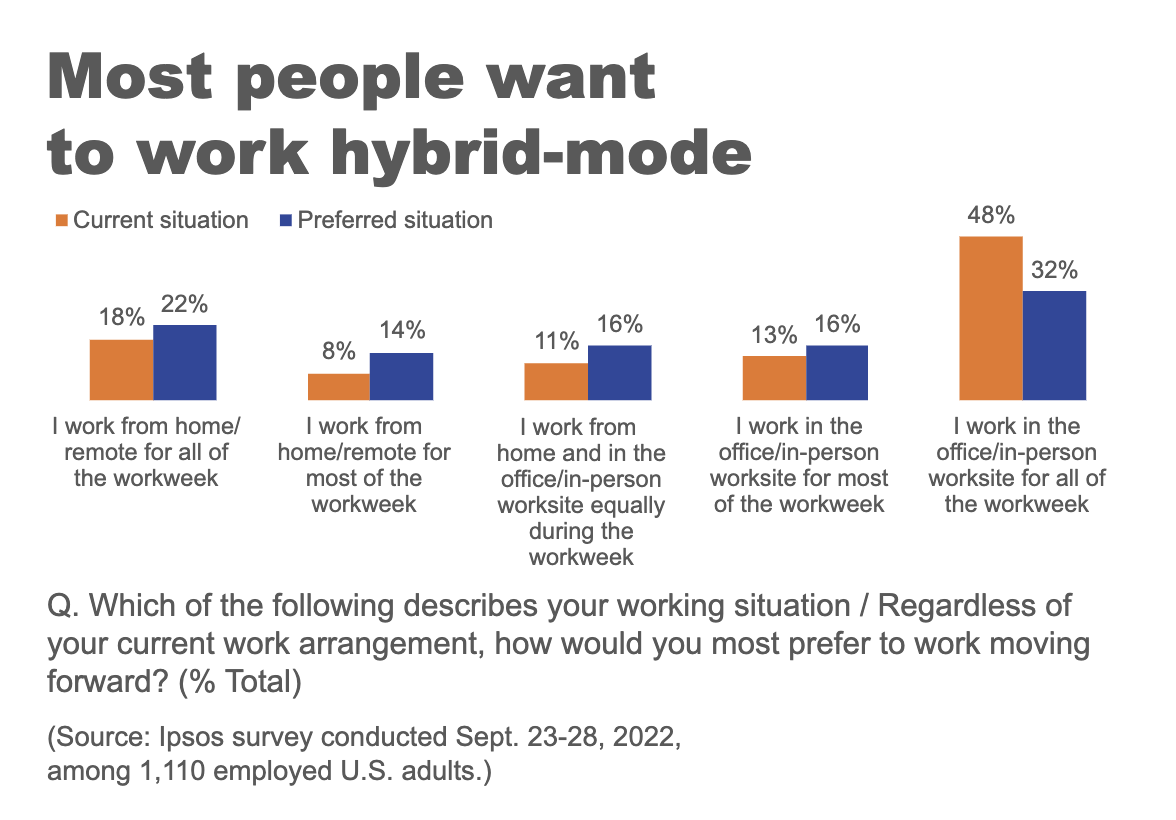
That said, let’s talk about the future of work itself for a moment, because that’s an important starting point. It’s easy to look at the tensions in this issue, like flexibility vs. consistency or privacy, or commuting vs. not and see a very divided workplace. Ipsos data shows nearly 50/50 splits on those topics, which leads us to a future we can agree on: a hybrid and flexible workplace. Why? Because if it’s truly flexible, one worker can have the flexibility they want, while another can have the consistency of hours or pay or structure they need, right? If the system itself is flexible, everyone can get what they need.

The question is, of course, can we get there? I think the answer is “Yes,” as we’ll discuss with some of our experts along the way.
I spoke to workplace expert, author and futurist Alexandra Levit. She described a future where your work and your life coexist. “There really won’t be a boundary,” she says.
In other words, the future will be less about work-life balance and more about work-life blending. This will require many things to happen, all of which are in progress and plausible. Levit thinks immersive realities are poised to break out of the gaming world into the business world in a big way, either when the tech improves or when we have another pandemic. “The only reason it’s been as slow as it has is because [video conferencing] has worked well enough for what we’ve needed for now,” she says. “The second time this happens, we’re going to see an explosion in the usage of metaverse technology.”
Amazon Web Services’ Jon Izenstark thinks the next thing we need to do is to evolve the systems and cultures at the office. He says that the pandemic was less transformative than people gave it credit for. All that really changed was the mediums by which we accomplished the same tasks in the same cultures. Now is the time to adapt the workplace to doing things differently — with a big tech assist.
In order to transform to a more hybrid and flexible future, we’re going to need empathy. Anna Tavis, a professor at NYU’s School of Professional Studies and author of “Humans at Work,” sees empathy as “a foundation for human-centered design.” Empathy is needed because, she says, “You listen, you look and see what people are doing and walk in their shoes. Do you know how many work-related issues could be solved if we paid attention to whether people are trusting [each other] and enjoy working together?”
Most workers (74%) feel trusted by their employers, according to the Ipsos Future of Work survey. And managers overwhelmingly (82%) say they trust their employees. There’s a sizable gap, however on empathy. Just 55% of non-managers say they feel their employer is empathetic, whereas 81% of managers say they have empathy for their staff.
Empathy is an unguaranteed extension of consumer research. To put it one way, research is about listening, and empathy is about hearing.
As the future plays out, the extent to which we lean into hearing vs. listening will determine how much our flexible future works for the humans and how much that spills over to benefiting the organization, too. As Darden Restaurants’ Ali Charri told us, these goals should align. “Happy team members will lead to happy guests and happy guests will lead to strong business performance and happy shareholders,” he says.
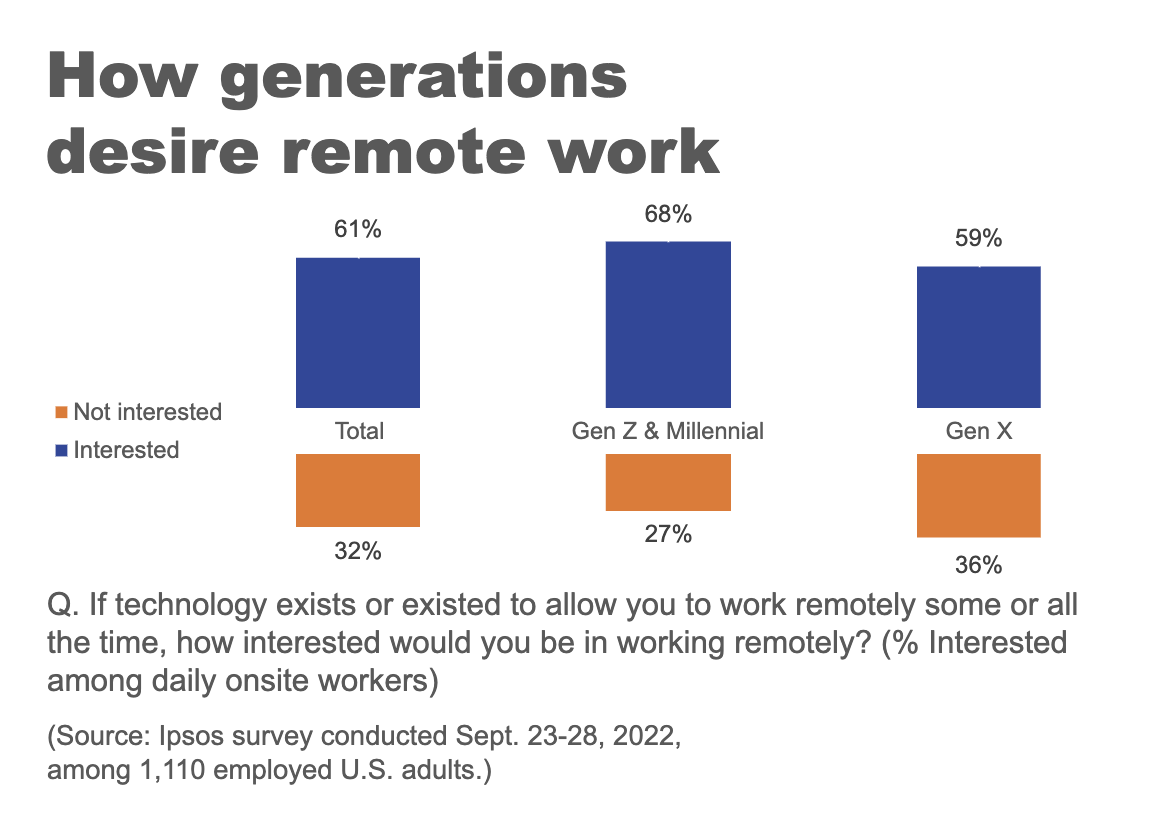
We’re seeing some experiments in the future of work that would play into new ways of structuring our lives and how we pay for them. Many nations and employers are experimenting with four-day workweeks and universal basic income. There’s key tension between the desire to emerge from the pandemic, and as some say, build back better, but also a strong desire to “return to normal.” So, the future of work could indeed look much like the present.