
How marketers can reimagine the American Dream for growing populations
America’s Black, Hispanic, Latino and Asian communities will drive future growth, even as the overall population declines, per U.S. Census projections. Even with low or no immigration, our multiethnic population will still become more nuanced, as we already see in Gen Z. Planning and strategy expert Asmirh Davis is founding partner and president at Atlanta-based creative agency Majority. She says that if brands want to get ahead, they must master cultural fluency and competency to connect authentically across our evolving demographics.

Kate MacArthur: As our population becomes more demographically nuanced, how do you expect views of the American Dream to change?
Asmirh Davis: The obvious one is who the American Dream is for and what that looks like will shift. With that change in the population, who can achieve and who is striving for the American Dream looks different. Then, by proxy, what the American Dream is and how you define it changes. Culturally, you’ll start to see more of the nuances these demographics are bringing into America by nature of the extended culture of where they come from. The pursuit of the American Dream is probably going to be less through the lens of building and amassing as much wealth as I possibly can to serve my individualistic needs, and more of how I can make the world and my community and the people that I love better in a less financial way.
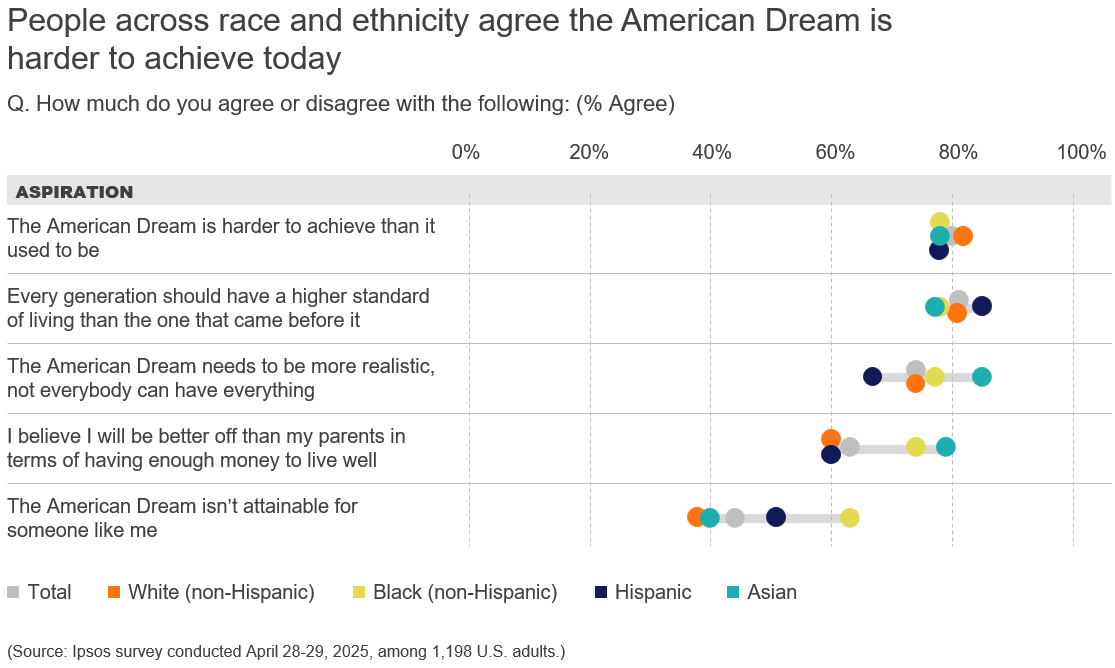
MacArthur: Americans say the Dream is harder to achieve. What does that mean for marketers?
Davis: It tells me that people are begging for brands and marketers to get real and be real. People are tired of being gaslit on this idea that you can do anything you want to do. You can still maintain a level of hope while being grounded in reality.
MacArthur: Let’s talk specifics. Financial security was the most-used term for white and Hispanic Americans to define the Dream. It was No. 2 for Asian Americans but not in the top three for Black Americans. What does that tell you?
Davis: For most Black Americans, it’s been about incremental gains from generation to generation. For my generation, a lot of it was based on education and getting more higher education, which then ultimately could lead to a path to financial security and success and more opportunity for the next generation. Before that, it was probably much more centered in finances and financial security, homeownership, etc., creating a space and putting our mark on the world that can be passed down.
MacArthur: Homeownership has been linked to the Dream, especially in ads. While Asian Americans most selected that as a definition, it was lower overall.
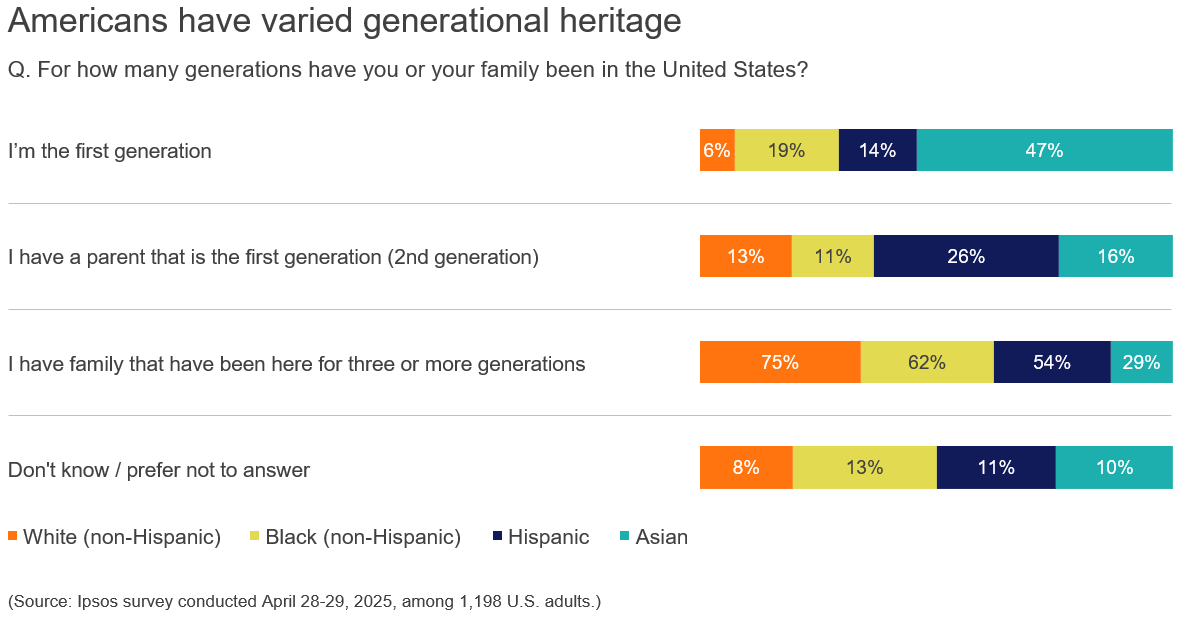
Davis: That’s definitely a reflection of the last decade, especially of socioeconomic challenges generations of both white and Black Americans have faced. The Asian community is more populated with first- and second- generation immigrants, so there is more importance of establishing a footprint in America. They are far more likely to live in multigenerational homes. So the importance of establishing a place where mothers and grandfathers and cousins and siblings can always know they have shelter is still a very important part of their culture and personal values.
MacArthur: Personal growth was cited by 14% overall but by 20% of Black Americans. What can marketers learn from this?
Davis: This is really important for marketers to take note of, because it has become this assumption that these individual communities are a monolith. As marketers, we’ve got to get away from these archetypes and these stereotypes. There is an abundance of personalized and individualized wants and needs and motivations. So you have to be just as intentional and insightful in messaging to them and representing them as you do with the total market or the white American audience.
MacArthur: What are the implications for the future?
Davis: It’s very important that what we put out into the world has a level of cultural fluency to create what I call cultural elasticity. That focus now is less about pricing and less about positioning and more about cultural fluency and competency, and how you are moving with the audiences, their mindsets, their wants and their needs, and showing up authentically to not just reflect, but be felt within diverse communities, and connecting with them more deeply.
MacArthur: What questions should brands ask?
Davis: We talk about brands a lot in the strategy world as “If this brand were a person, who would it be?” That’s a great place to start. Once you understand who you are, you can understand how you should be represented, not just in the world, but across these different demographics by empowering those that represent these audiences to be the ones that are defining how that brand moves in the world.
 People are tired of being gaslit on this idea that you can do anything you want to do. You can still maintain a level of hope while being grounded in reality.”
MacArthur: But there’s also a fundamental desire for understanding our common ground, yes?
Davis: There is. We start with a human insight. Because everything needs to be grounded in that regardless of who you are, where you come from, you understand this. Then we dig deeper into the audience we want to connect more deeply with and what does that mean to them? We approach things in what we call the bigger idea. So everyone can understand and feel a sense of humanity in whatever that bigger idea or message is.
MacArthur: With Gen Z in mind, how can brands authentically connect with them?
Davis: Performative marketing is the biggest trap in talking to this generation. When you talk about Gen Z slang, it’s slang that is oriented from Hispanic communities and Black communities. This generation is infusing so many different cultures into their lived experience because this generation has so many demographic elements to it.
← Read previous | Read next → |