

How public health can rebuild trust from the ground up
The nation’s public health budgets are being retooled under the Trump administration with research priorities shifting. This comes at a time when the system needs to be rebuilding trust, says Dr. Shereef Elnahal, who formerly served as under secretary for health at the Department of Veterans Affairs. When he thinks about the future, he’s worried that he doesn’t see a substitute for the National Institutes of Health and its federal funding. But he sees paths forward for building trust and thinks AI has a role to play in healthcare.
Matt Carmichael: What is the most significant risk to public health?
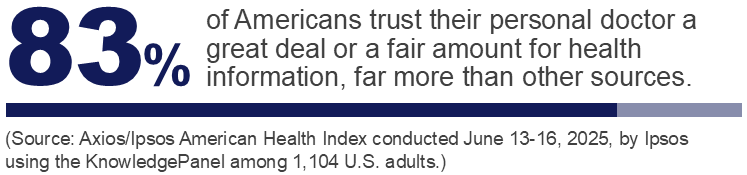
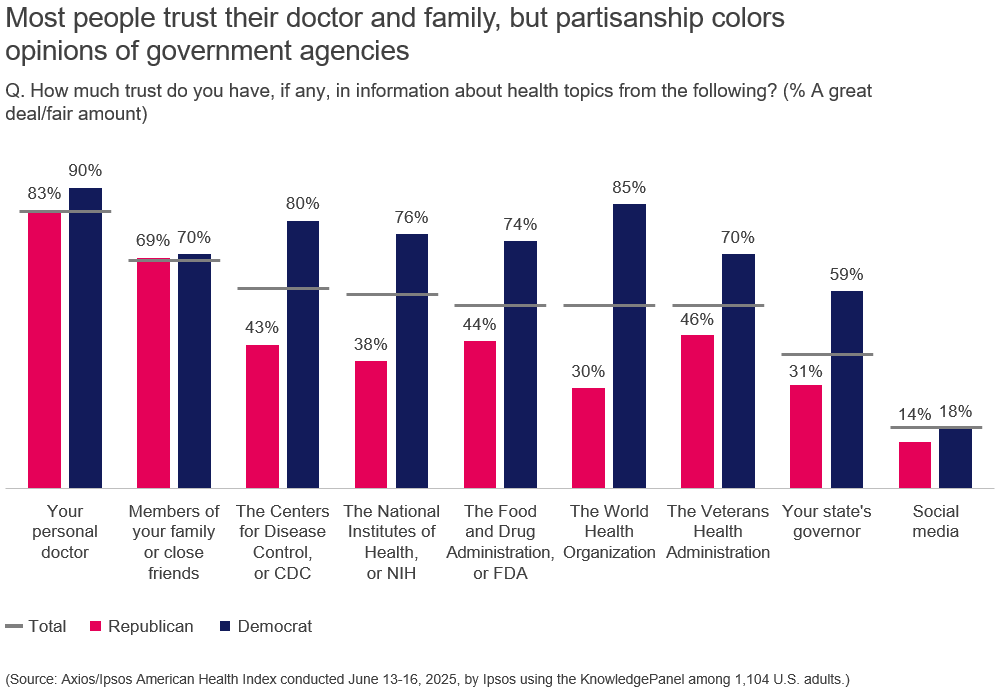
Dr. Shereef Elnahal: What's top of mind for me is trust. In clinical medicine, you prescribe an intervention, and as long as they take the medication, they get better. Public health is a much harder macro issue that's multifaceted with many inputs. But when it comes down to it, you're just empowering individuals to behave in ways that are healthier. A lot of these things require folks to be learning and then to be convinced that you have their best interest in mind. It's incumbent upon public health practitioners to make intentional efforts to build that trust and to make those connections with people by making the right arguments in a culturally sensitive way. This gap in trust is a deficit that we need to solve for.
Carmichael: How do you build that trust?
Elnahal: We can no longer be issuing guidance and edicts from institutions without having a very diligent strategy on how you engage people who are meant to benefit from such guidance, right? Understanding what kind of language resonates and the barriers to behavior change in a way that leads evidence and testimony from the very people in communities that you're trying to help requires work.
Carmichael: What kind of work do you need to do?
Elnahal: Ideally it involves human-centered design from top to bottom on how to communicate with people more effectively and then what interventions should look like to maximize their chances of success. But you can't do that without involving the people you're intending to help.
Carmichael: Foresight and public health have something in common. Both have uncertainty baked in. How do you communicate that and build trust?
Elnahal: The scientific community needs to learn how to be more forward about what we do not know. A lot of the pandemic guidance, for example, was based on the best, very limited, information that public health practitioners had about the virus and the vaccines. We should have admitted transparently that we didn’t have all the answers and been more precise about the likelihood that guidance might change.
 The health systems, the payers and the institutions that figure out AI will win the future.”
Carmichael: What role does government have in health research?
Elnahal: Any corporation is going to want to invest a certain percentage of their expenses into discovering the next new and best thing. The NIH and other federal agencies have invested in research that does not have that immediate financial return opportunity that healthcare investors and industry look for.
Now, is there waste in some of the research investments we make? Absolutely, there's a lot of opportunity for efficiencies. An exercise like this should involve the scientific community very closely to make sure that we're not unintentionally cutting off American competitiveness in biomedical science. Those are the stakes, because I don't see any other major global power cutting back on scientific research.
Carmichael: And private equity investors?
Elnahal: They help empower innovators with new solutions and new technology. That’s a needed part of our ecosystem. But you have short-term financial pressures that ultimately guide investment decisions in ways that might miss innovations that need a lot more investment but could ultimately yield better outcomes.
Carmichael: How will AI reshape the system?
Elnahal: The health systems, the payers and the institutions that figure out AI will win the future. That doesn't mean that they'll respond by laying off their workforce. By contrast, I think the first phenomenon you'll see is that workers will multiply in their productivity and their job satisfaction because people tend to be happier when they're accomplishing their goals and not dealing with untenable workflows and working conditions.
← Read previous | Read next → |