

How TV, our favorite hobby, is evolving for advertisers
People’s leisure habits are changing, especially in how we watch television. Americans still spend more time watching TV than any other leisure pursuit, according to the American Time Use Survey. But evolving consumer behaviors, and a transforming media landscape are reshaping how people engage with content. Amanda Lotz, a renowned media analyst and professor of media studies at Queensland University of Technology, sees a more complex video space that will require companies to know why people are watching more than where.
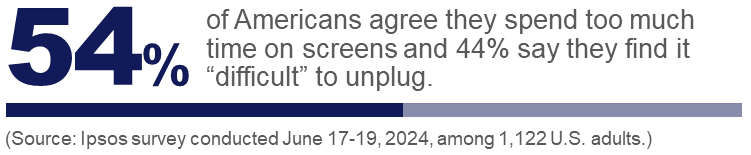
Kate MacArthur: Our survey shows that most people watch on multiple screens. What is that telling us?
Amanda Lotz: I'm less concerned about the screen — I don't know that that tells us much, other than the conditions of where people are — and, instead, trying to think more about motivation. The user is trying to achieve something. Maybe it's connection, which might be achieved by a social media feed or watching a show or movie with someone. At other times, maybe we just need to pass time. So it's coming back to understanding human behavior. Now humans can satisfy a lot of different needs with a wide array of media, on different screens, and not just video.
MacArthur: Are the motivations of consumers and media in direct conflict with each other?
Lotz: Well, we are not in a mass media business anymore, and the economics of that context are not suited for the current era. A multifaceted video environment isn't going away. It requires services to be the destination that fulfills a certain motivation or a certain experience and does so well. That's the strategy that works in that complex environment, rather than what worked in the conditions of scarcity that existed in the past. If the choice is a comedy, a drama or news, and people don't want any of those, they can go somewhere else and still have something that is comparably satisfactory.
“I'm less concerned about the screen … and, instead, trying to think more about motivation. The user is trying to achieve something.”
MacArthur: How do new technologies create new strategies for advertising-based media?
Lotz: The language historically was “least objectionable programming.” But with addressable ad tools, platforms can sell ads based on demographic categories but independent of what is being watched. Advertisers don’t have to buy viewers in “Stranger Things” on Thursday night. They can buy men 18 to 25 on Thursday night, and it doesn't matter what they're watching. That's a crucial difference in the implications of bringing advertising in, because that means that you don't need to start flattening out the programming and going for a “least objectionable” strategy.
MacArthur: How will AI affect the business?
Lotz: AI is going to be useful for certain things: dubbing, subtitling, the digital effects. That's clear. The idea that AI is going to completely take over creativity and the telling of stories — I'm skeptical about that. Will there be content around the edges created by AI? Probably. We don't know what the business model is here. The challenge is finding a value proposition for enough viewers in this environment where there are a lot of different ways to satisfy our leisure needs.
MacArthur: How long can streaming services raise subscriber prices before we see a shakeout?
Lotz: The shakeouts are starting to happen. If we look at advertising over time, a ton of new money is not sitting somewhere about to come into the sector. It's a fixed pot. It's expensive to make content. If we fragment where the attention is too far, we start to lose a business model that can create original content. There's not room for all the players, especially when you have Amazon and Apple playing a related but entirely different game. And then you have this whole other sector [social] that is not based on licensed content, and a lot of people find a lot of satisfaction there. The attention keeps getting spread more broadly, and the decreasing dollars in professional video make costs of production challenging.
MacArthur: Can you envision a post-screen era, and what that would look like?
Lotz: The thing that's still on the horizon, and we’re seeing it with Roblox, Minecraft and Fortnite, is the increased use of, let's call it, mediated sociality. It's not a replacement for going to a movie. It's not a replacement for playing a video game. It's about a virtual social experience that is better than we've had yet. You can do some things on the phone, yes. But we haven't quite gotten to an experience that feels like what it's like to go to Papa's house and play checkers with him. That'll still involve a screen but won't be content being created for an audience.
← Read previous | Read next → |