

The benefits of cross-generational design

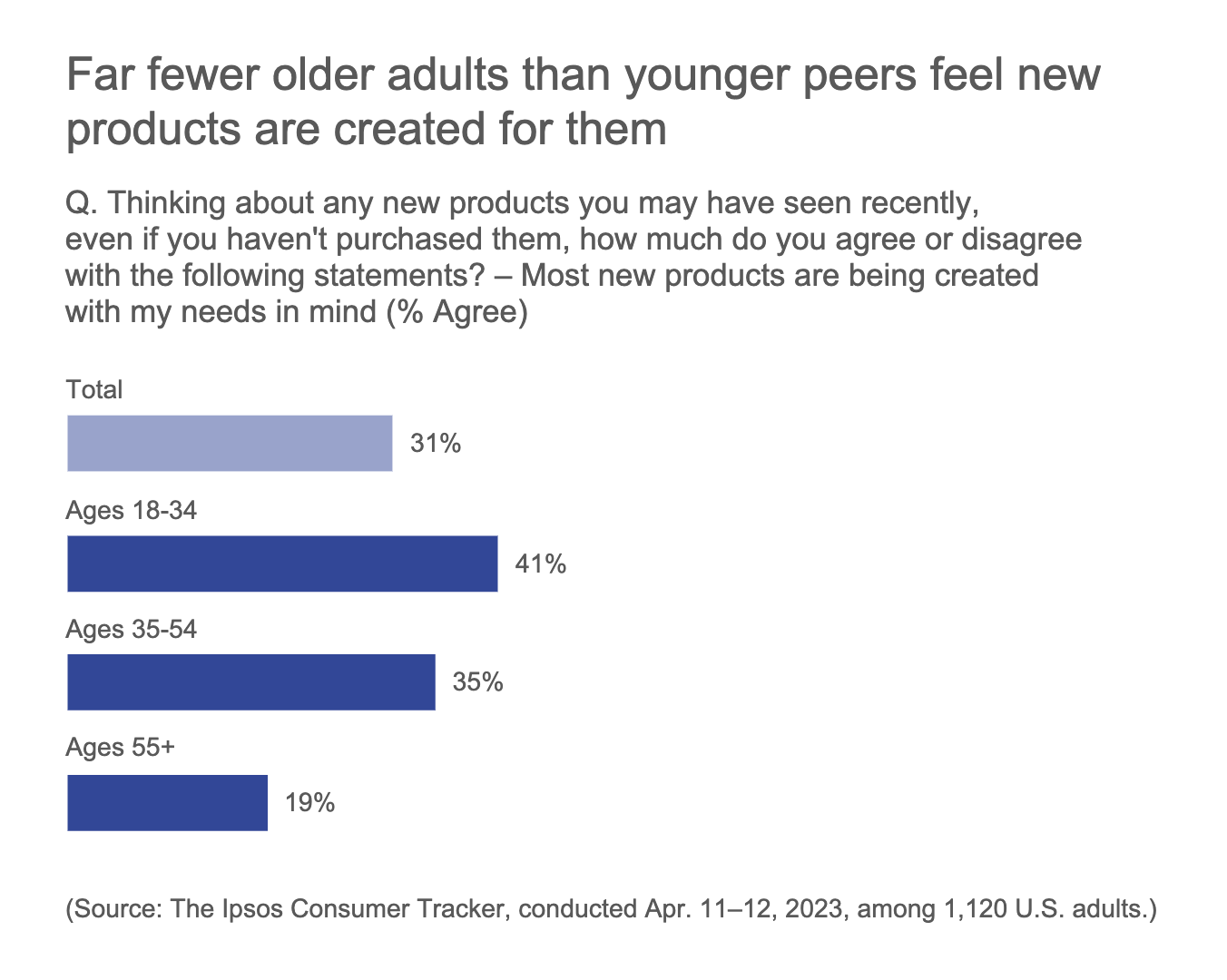
Ipsos research shows that older Americans feel overlooked not just in their cities, but also at the store. Only 19% of consumers over age 55 feel that most new products are being created with their needs in mind, compared to 41% of consumers aged 18-34.
The Census Bureau expects that nearly a quarter of Americans will be aged 65 or older by 2030, making this an increasingly expensive oversight. But the aging of America isn’t just a demographic inevitability — it’s an opportunity for brands to center inclusive design across their products and services, says Alyson Heffernan, a senior vice president in Ipsos’ Innovation practice.
“By centering inclusion and accessibility, brands can build trust with shoppers across generations.”
These principles can have unexpected benefits, too. Packaging that’s designed to be easier to open, for instance, isn’t just more accessible, but less wasteful and less frustrating for all who use it.
As the “8 to 80” city philosophy illustrates, planning for youth and older adults tends to work better for everyone in between. The brands that keep older Americans’ needs in mind will develop products that work better for all ages.
|
← Read previous |
Read next → |
For further reading
Why brands need to innovate for older Americans