
How safety and security are evolving in the digital age
It’s been said that the best offense is a good defense, but a good defense is a good defense, too. Dominic Perez, chief technology officer for aerospace manufacturer Curtiss-Wright, thinks new improvements in telecommunications, health monitoring, and data collection can keep soldiers safer in unpredictable times. These advancements hold promise on the domestic front, too, from powering humanitarian work to keeping businesses and critical infrastructure secure from cyberattacks.
Christopher Good: Data plays a huge role in modern defense. How will that change over the next decade?
Dominic Perez: Everyone's already collecting just about everything that can be collected, from biometric markers on a soldier, to the frequency and amplitude of vibrations on a helicopter engine, all the way down to the post that you're liking on social media. I don’t think it’s the type of data that’s going to change, but what we can do with it. The associations that can be built with large language models [AI algorithms] will really blow peoples’ minds.
Good: What are some uses for those data sources?
Perez: Fall detection is a pretty simple one. You have soldiers wearing sensors, and if they’re down, you can send someone to help them. There’s also heart rate to measure fatigue, or galvanic skin response for hydration. These soldiers are out in the harshest conditions doing a job more difficult than any of us can imagine. If we can support them health-wise, that’ll be important.
Good: How do you use that data responsibly?
Perez: The key is context and nuance. Many things that are true across large populations have very little relevance to the individual. One example is BMI (body mass index): It’s a metric that was originally designed to be applied to entire populations. But when you look at an individual, it may or may not apply. We need to use some common sense. Which is sometimes not common! And we’re just beginning to understand how bias can get inadvertently baked into these systems. If people are using them as a basis for life-altering decisions, they need to build a rigorous human review process.
Good: Is complexity a problem in this tech?
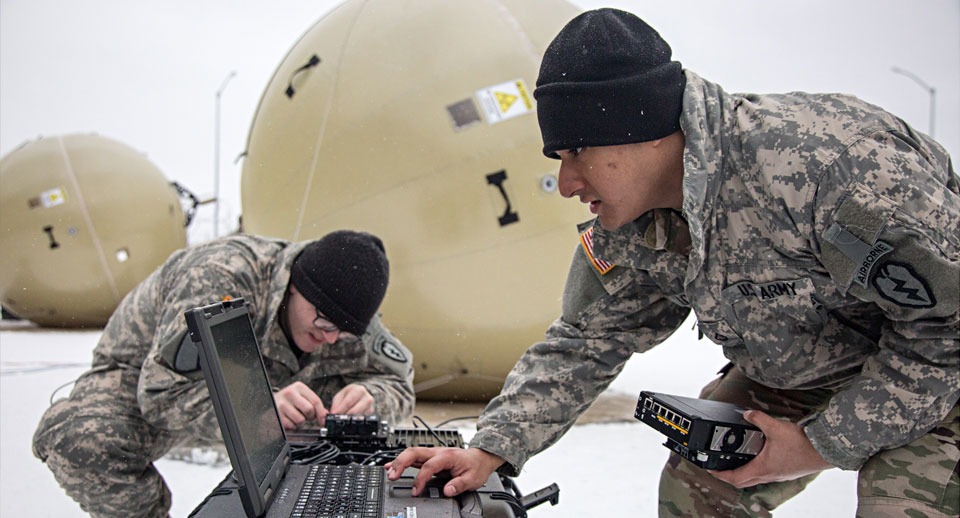
Perez: A soldier is not an IT person, but they often have to act as one in really terrible conditions. So, something we've been developing for over 15 years is PacStar IQ-Core Software, a platform that sits a layer above those networks and takes away some of the complexity.
Good: What does that look like?
Perez: We found that to add a phone to a system using the native software, it takes like 60 clicks of the mouse, and in our software, it takes eight. But for another example, imagine a special operations warfighter. If the digital information sources are too complex, they’ll just revert to radio, right? All this complexity has to be balanced with usability.
Good: How do you keep all this technology connected, charged and online?
Perez: Today’s battery technology is amazing, but we haven’t really had a revolution since the lithium-ion battery. Looking to the future, there are options like hydrogen fuel cells. But powering, storing and transporting them is very difficult. One exciting area is the potential for advanced small, modular nuclear reactors. The Department of Defense has been exploring potential applications for years, and they’re very, very interested in how that is going to develop.
Good: How would that work, exactly?
Perez: I’m not saying we're going to strap a reactor to a soldier, “Iron Man”-style. But to airlift a small reactor — that’s not science fiction, or even very far off. And dropping those into areas without working infrastructure? That’s going to be a game-changer for decarbonization, for humanitarian aid, and for defense.
Good: What’s the most important lesson you’ve learned from the war in Ukraine?
Perez: What we’ve seen is that modern conflict is a lot more like everyday life than a traditional conflict. You have operators working off their cell phones or collaborating through WhatsApp, where standard network connectivity is critical — stuff we take for granted. A lot of NATO countries don't have the budget that we have, but when things get tough, they are going to find a way to get it done. If that’s through WhatsApp, that's what's going to happen. So, we need to help protect those networks.
“What we’ve seen is that modern conflict is a lot more like everyday life than a traditional conflict. You have operators working off their cell phones or collaborating through WhatsApp.”
Good: What should businesses and marketers be thinking about right now?
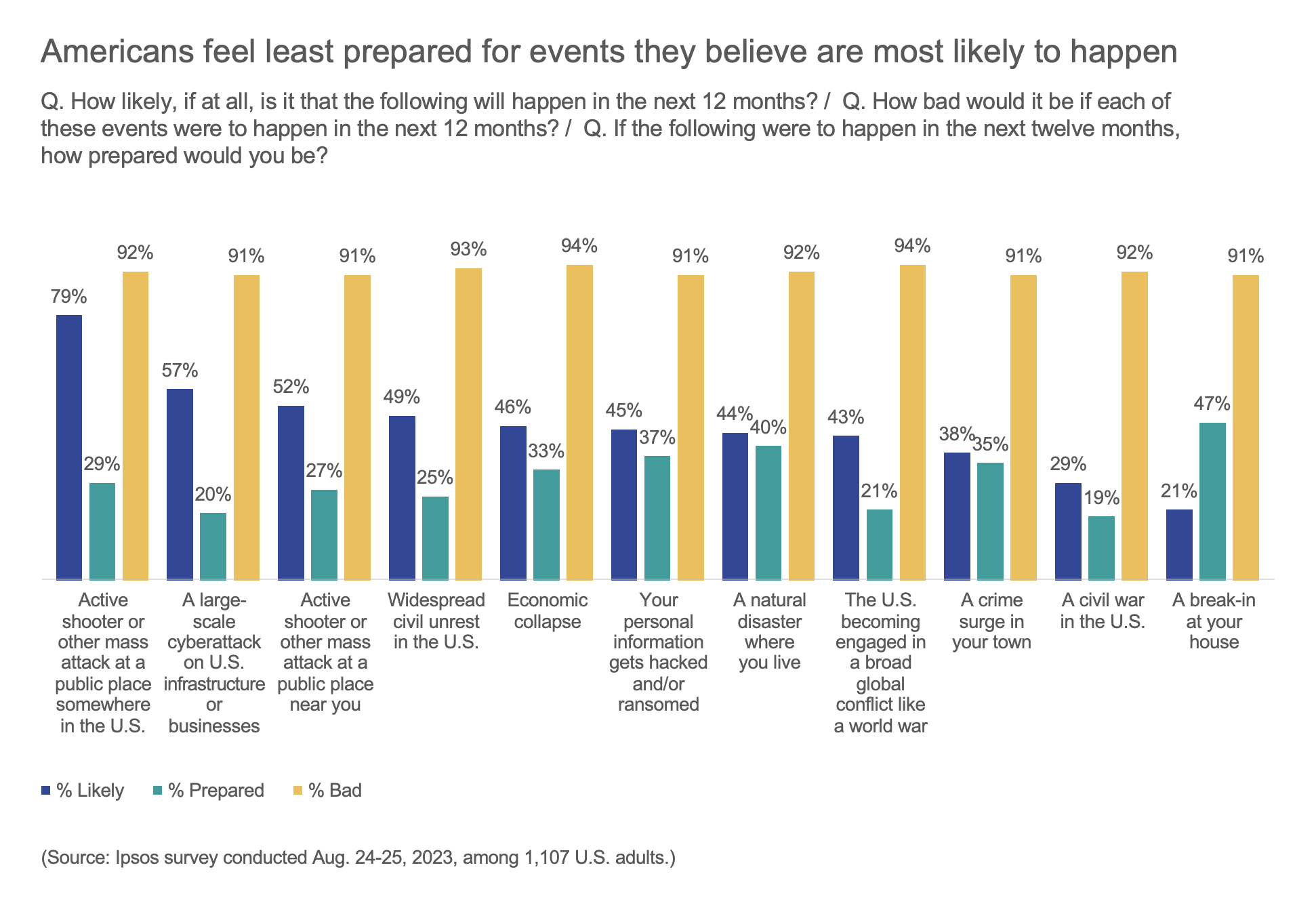
Perez: The biggest thing is probably cybersecurity. Our border was physically defined by geography, but that's no longer the case. We are on a cyber front that has millions of access points, maybe billions. And our adversaries have shown that they have no regard for the difference between military or government installations and civilian installations. They will use any opportunity to launch a ransomware attack against a hospital, knowing that’s impacting life-critical operations. And if they pay that ransomware, even if your stuff gets unlocked, the funds are going to the cyber-criminals, further emboldening them. Any business could become a pawn in a much larger game.
|
← Read previous |
Read next → |