

How a new mindset is taking shape among young startups
Most younger Americans would rather start their own business than work for a company, given the choice, according to Ipsos. Justin Massa was a young entrepreneur himself as founder of a highly valued and lauded startup. He has since worked with other young entrepreneurs as a mentor with TechStars Chicago and as an investor. Today, at the climate solutions incubator Newlab, he sees a key shift in the startup culture that could help solve climate change and create jobs while doing it.
Matt Carmichael: What’s it like working with young entrepreneurs today?
Justin Massa: Kids just out of college seem to understand what they want to do with their lives radically differently than we did at that same age. There has been a notable paradigm and mindset shift about how young entrepreneurs talk about what they're doing.
Carmichael: How so?
Massa: When I was first becoming an entrepreneur, you would hear talk about “I want to do well, and I want to do good.” Then there was the effective altruism movement: “I want to make a lot of money and then use that to do good in the world.” My hunch is that there's been an evolution of that sentiment of what it means to have a double bottom line. The thing I'm observing is it's gone from “I'll make a lot of money and then I'll donate it” to “the thing that makes me money must also be good for the world in and of itself.”
Carmichael: What does that look like in practice?
Massa: The mission and business model have grown closer and closer together until — in the entrepreneurs I'm now meeting — those two things are completely enmeshed into one another. The idea of having a company that doesn't have larger scale impact as a core component of its identity is very foreign. When I had my own company (Food Genius) we donated food, did food volunteerism, but if you weren't an employee, you probably had no idea about any of that. It was adjacent to the business. It wasn't the core of what we did.
Carmichael: Do you think all this can translate into other sectors and other forms of entrepreneurship?
Massa: I don't see why it couldn’t. Well, I won't say that. This vibe in fintech might be very hard.
Carmichael: What has changed since you were running a startup?
Massa: Fifteen years ago, doing entrepreneurial things with big companies was like you were the animals at the innovation zoo: “Oh, look at these neat animals. Maybe I'm going to feed one, but I'll never take one home.” I had a meeting with a big, public-company C-suite. In hindsight, what was I thinking? Nothing was ever going to come of that. They had no clue what they were doing. We were just a dog and pony show. If I fast-forward to today, the level of sophistication of how large corporations, and especially governments, have figured out how to work with early-stage companies is a sea change. Not everybody, but some.
“But the pragmatism now manifests and the phrase that I hear us say a lot is, “We don't have time for moonshots. We need to just get to work.”
Carmichael: You work with climate-related startups. How are they feeling about the task at hand? Do they want to move fast and break things?
Massa: I've observed not just the willingness, but an eagerness and a desire on the part of forward-thinking government agencies, civic partners, mayoral administrations and corporations to lean into this and really dedicate to it. I don't hear people say “move fast and break things” very much. The pragmatism of that still lives, which is that I'm going to push forward. But the pragmatism now manifests and the phrase that I hear us say a lot is, “We don't have time for moonshots. We need to just get to work.”
Carmichael: How does the double bottom line work?
Massa: I thought there would be this double bottom line, but that I would still see the same business behaviors that I've seen in so many other industries across my career. But I'm observing a different business ethos in climate change. I have to believe it's informed by the severity of the problem. But it’s also informed by a different generation of entrepreneurs with different priorities working in different ways, pushing industry to work differently.
Carmichael: There’s a trope that if we try and fix climate change, everybody's going to lose their job. As someone on the inside, how do you counter that?
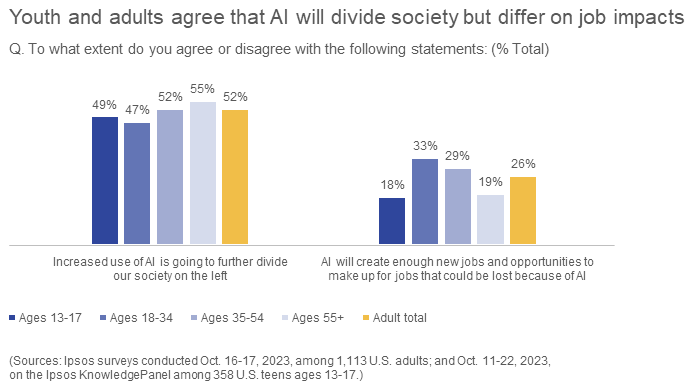
Massa: One of the key performance indicators we track here at Newlab is, how many jobs have we created? We’re in 90,000 square feet of space in Brooklyn that the city of New York helped us pay to build because they knew that we create jobs. Yes, there are going to be jobs that are affected. The net impact of the new jobs that are also going to be created as these industries emerge and scale massively is going to offset it. There will be moments in which the balance gets uneven, but I would be willing to bet that if we fast-forward five, six years we’ll see a net increase in the number of jobs as we go through this transition.
|
← Read previous |
Read next → |
For further reading
What tech needs to do to keep its innovative reputation in tough times