
How today’s parents are raising tomorrow’s leaders differently
Rachel Minkin is a research associate at the nonpartisan think tank Pew Research Center, a long-time partner with Ipsos. She has contributed to studies on subjects such as parenting, family life trends, gender identity, and the evolving workplace, all of which shape how we approach the task of raising future generations. She sees a shift in parenting methods, compared to past generations, as part of Pew’s "Parenting in America Today" report. Here are some of her insights, along with the factors driving this change.
Kate MacArthur: What was the most interesting finding about where parents are today?
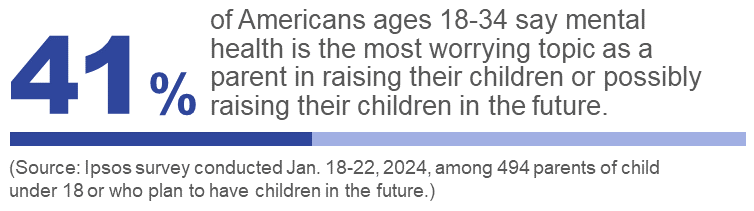
Rachel Minkin: With parents of children under 18, it's striking that 62% say parenting is harder than they expected it to be. We also see that parents emphasize financial independence and job satisfaction as goals for their children when their children are adults over graduating from college, getting married and having children.
MacArthur: What was the most dramatic difference between people wanting to parent like they were raised versus not?
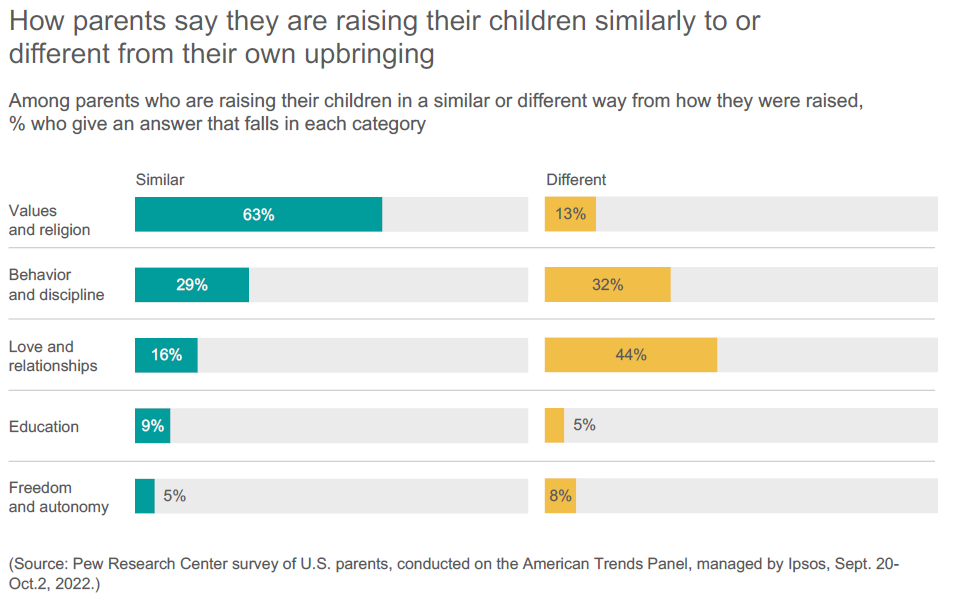
Minkin: Roughly as many parents say they're trying to raise their children in a similar way to how they were raised as trying to raise them differently. For those raising their children similarly, some of the largest themes are about passing on values, and religion is included in that. Among those saying they're trying to raise their children differently, 44% mentioned love and their relationship with their children, a sense of openness, sharing emotions, and creating a relationship with their children. Another 32% of parents who say they are raising their children differently mentioned their expectations for behavior and approach to discipline.
MacArthur: Are you able to ascertain any societal shifts that might be driving those differences?
Minkin: A lot of those who said they were raising their children differently mention the type of behavior and discipline that they grew up with is not an approach they want with their children. Some mentions of gentle parenting and different approaches had come up in the responses.
MacArthur: How do the parents’ ages shape their parenting styles?
Minkin: Parents under 30 are more likely than older parents to be overprotective. But at least some of these differences could be driven by the age of their children. Parents 50 and older are more likely than other age groups to say they're raising their children somewhat or very similarly to how they were raised.
“Thinking about all the things that parents could worry about for their children, seeing that 40% are extremely or very worried their children will struggle with anxiety or depression is a key finding..”
MacArthur: How might evolving gender roles or gender differences reflect in the parenting styles?
Minkin: We didn't find a difference between mothers who work for pay and mothers who don't work for pay for responses about finding parenting to be stressful. One might look for that there. Mothers tend to say they do more than their spouse or partner in opposite-sex relationships, while fathers tend to say they share responsibilities about equally. Majorities of mothers say they do more when it comes to managing their children's schedule and activities, helping their children with homework or other school assignments, providing comfort or emotional support to their children and meeting their children's basic needs among those with children younger than age 5.
MacArthur: How might non-traditional families shape the bigger picture?
Minkin: Both married and cohabiting parents and parents who aren't married or cohabiting prioritize financial independence and career satisfaction for their children. They see those as very important, more so than the other things we asked about. But those who are married are the more likely to say it's extremely or very important that their children get married when they're older.
MacArthur: What's the biggest question you have about the future of parenting from the “Parenting in America Today” study?
Minkin: Thinking about all the things that parents could worry about for their children, seeing that 40% are extremely or very worried their children will struggle with anxiety or depression is a key finding.
| ← Read previous The changes in people, markets and society that will shape the future of parenting | Read next → |