

How brands can navigate complex parenting styles
As we emerged from the pandemic, the parenting landscape was complicated, to say the least. It was a challenging time to bring a global brand into a new market like the U.S. So, Ferrero’s Kinder Chocolate brand worked with Ipsos on a segmentation to understand today’s parents. And what they learned portends an increasingly complicated landscape of parenting in the future.
Matt Carmichael: As a marketer, why is it important to understand parents?
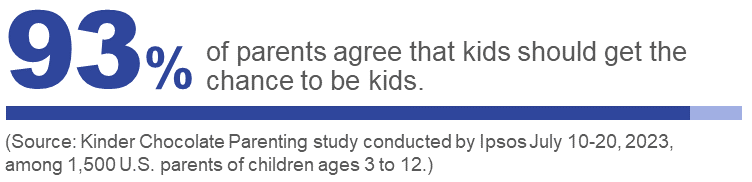
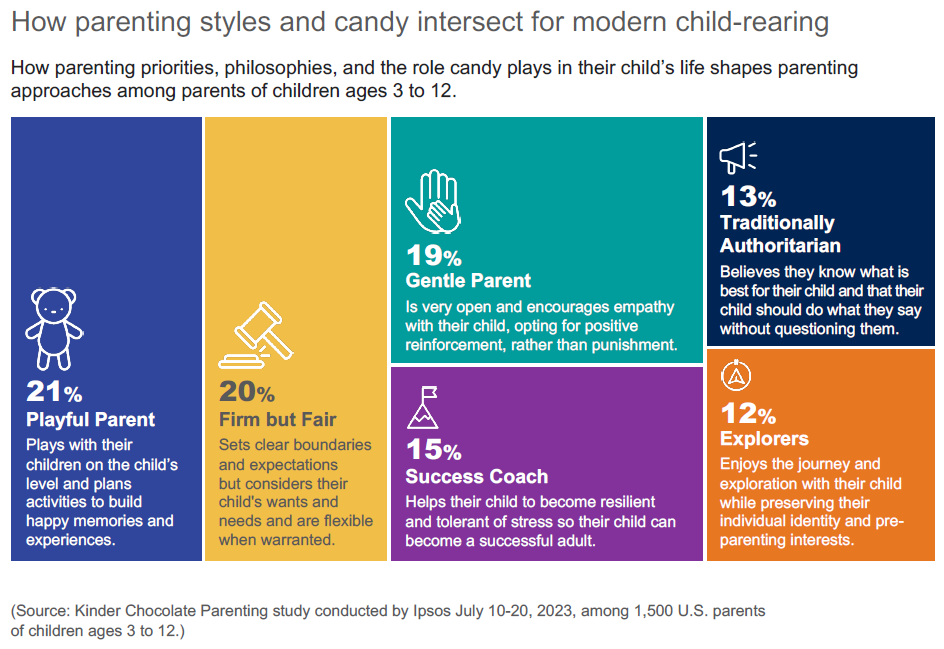
Catherine Bertrac: When Ferrero wanted to launch Kinder in the United States, we saw that parents have evolved. We used to have three types of parents: traditional authoritarian parents, permissible parents and some parents that were in between. But through the study, we discovered that there were more complex attitudes and behaviors in parenting, and the group of authoritarian parents is really small now.
Carmichael: How does that shape your strategy?
Bertrac: We see the importance of communication between the parents and kids and the transversal groups, and the importance of having fun together. It’s a playful moment for parents to connect with their kids. We developed a marketing strategy and a communication platform that leverages this to shape a new approach of showing kids and parents interacting together.
Carmichael: How can that lead to product innovation?
Bertrac: We have Kinder Joy, which is a product combining a treat and a toy. It could inform the way we design the toys, for instance, or select the right toys according to what parents are interested in.
Carmichael: What else was important to parents?
Bertrac: Parents in the U.S. are very keen on creating happy memories in the sense of “I need to create a happy childhood and happy memories,” because this is how we build a better adult in the future. And this is particularly strong, and parents are able to do that in the U.S. They're not shy about it.
Carmichael: That’s interesting since food has such connection to memories.
Bertrac: The ritual is important, but so is creating happy memories through new things. Gen Z parents want to share new experiences with the kids, with new brands and products and have kids discover more things and experience different tastes.
Carmichael: It’s like instant nostalgia.
Bertrac: You don't need to wait for 25 years to have the generation change in order to have this brand be relevant for U.S. families.
Carmichael: How are different segments of parents dealing with reward and treats differently?
Bertrac: All parents use treats and chocolate. It’s a moment of joy that every kind of parent is authorizing for the kids. It depends on the frequencies and the way you use the treat. The treat is a reward, of course. But it’s also sharing a moment of joy. So, the parents eat it as well, the same way they jump into play with the kids.
“Gen Z parents really want to raise their kids a different way. They don’t want to play the same role model that their parents played for them.”
Carmichael: Is the broadening of segments partially also a reflection of kind of the fragmentation of society and the complexity of being a parent today?
Bertrac: Demographics and societal evolution is generating this kind of clusterization. And Gen Z’s access to digital tools is changing their way of living and how they’re addressing their priorities in life and family. Gen Z parents really want to raise their kids a different way. They don't want to play the same role model that their parents played for them.
Carmichael: What other complexities arise?
Bertrac: When you’re in a couple, you may not have the same style of parenting because not everybody’s the same. It could be because of your background or your gender or you just have a different approach. How parents combine different styles is not easy. And the style may change according to the age of the kids.
| ← Read previous The futures parents want — and expect —for their children | Read next → |