
Ways to make tech advances feel more personal to purpose shoppers
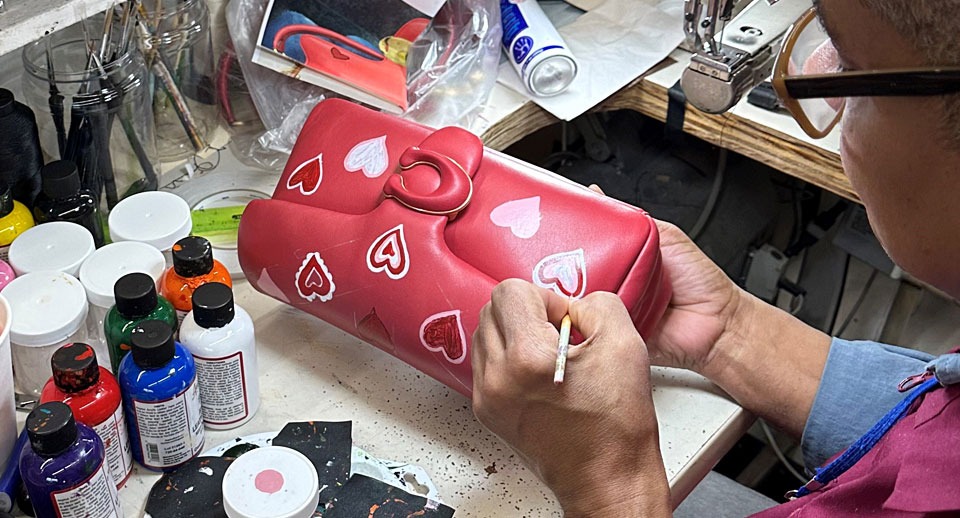
Love issue
Innovation can be an important part of solving environmental goals. If that’s part of a company’s purpose, communicating those benefits is important. But if a company is a fashion brand, it’s also important to help people communicate the brand choices they make and how those support their purpose. Alice Yu ties all these goals together from her role in insights at Tapestry, the parent of luxury brands Coach, Kate Spade and Stuart Weitzman.
Matt Carmichael: Coach is experimenting with new materials to help reach its and its customers’ sustainability goals. How does innovation play in?
Alice Yu: With emerging technologies, there might be trade-offs. And there are a number of factors that are important when it comes to communicating the craftmanship and quality behind our products. When evaluating new technologies, we look at multiple things: style and whether it meets the intended design; performance and whether it meets quality and cost expectations; impact and whether it has measurable environmental impact reductions compared to conventional materials. Additional considerations are things like can we manufacture at scale, or is it going to be more of a niche, trial type of product? What about the longevity? Especially for handbags. We know that many consumers have had their Coach bag for 30 years and been able to pass it along to someone else. We need to meet consumer expectations of the product first and bring sustainability as an added selling point.
Carmichael: Is it hard to communicate those tradeoffs?
Yu: Sustainability is very complex, and our consumer realizes that. But it’s our job to ensure that we’re addressing the concerns of the consumer across multiple areas, from sourcing to supply chain to climate and emissions.
Carmichael: These days there is backlash in some spaces even against sustainability. How do you communicate in a way that builds trust?
Yu: Part of it is communicating with transparency but continuing to move forward on ESG efforts. We don't have all the answers, and we're not at the end destination yet given that it’s a journey. But also, when brands stand firm in what they believe, consumers can see that conviction. Even if they don't fully agree with what it is that you're saying, they can see that it's important to you and you're standing by what you believe.
Carmichael: That’s often about helping consumers with a personal goal. That’s part of the reason why they want to shop with purpose. So how can brands make it easier for them to hit those goals?
Yu: Engaging and helping the consumer participate in some ways is key because a lot of the time we think about our world as being just the most insular piece of it. It might just be my world, right? The things that I interact with daily. Then there are the things that might impact the communities in which I live or the bigger context of global issues. The things that we engage with the most are the things that are closer in because we can directly feel and experience what that impact might be. At Tapestry we partner and encourage participation in new ways that impact both the issues that are closer in, but also those that make progress toward a more sustainable world.
Carmichael: What are some examples?
Yu: The Coach (Re)loved program, where you can directly engage and trade back in your old Coach bags and have them become something completely new and delightful for the next person, is a new way of engagement. Or with Kate Spade and their Social Impact Council and the work they do around the world to empower women in putting their mental health first.
Carmichael: Clothes and fashion are certainly about signaling style, but can they make a statement about our beliefs, too? Do customers want the brand and linkage to be more obvious or less so?
Yu: Some consumers in certain markets especially might want a little bit more overt signaling while others are a bit quieter about it, but still very much engaged on the personal level. We talk to consumers about the ways they want to self-express and the importance of exploring different facets of themselves. Clothing and style play into that.
Carmichael: Layering purpose onto those identities is another way to signal that a brand aligns with my values, and that’s why I own this versus that.
Yu: I am Asian. I’m American. I’m a woman. In different moments I want to express myself a little bit differently. Our consumers also have multiple facets of themselves they want to express. And going back to the whole proliferation of choice, there are so many different niche brands, indie brands, big brands. Consumers have a lot of choice and can spend their money with the brands that align with the values they care about.
|
← Read previous |
Read next → |