
Why advertising will still need human creative directors
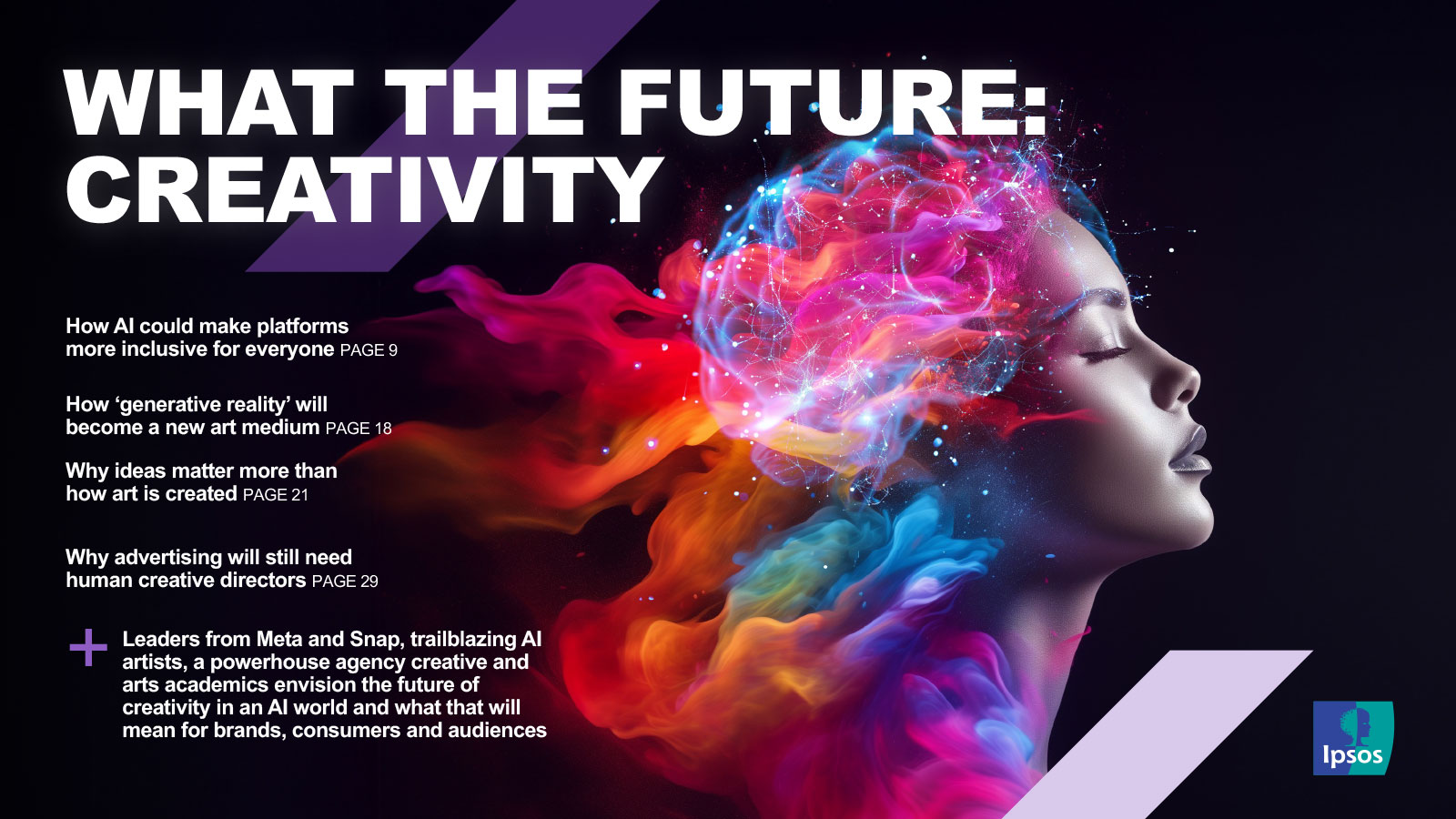
Ad agency Mischief exploded on the scene in 2020 with its deepfaked “Dictators” campaign for RepresentUs showing Vladimir Putin and Kim Jong Un speaking English to warn Americans against election interference. It was the first use of artificial intelligence technology for a major TV campaign. While banned from airing, the effort went viral. Today, Mischief is the hottest ad shop in the world. But as AI is igniting advertising, don’t expect it to take over the creative work, says partner and ECD Bianca Guimaraes.
Kate MacArthur: How do you approach campaign development and media selection in the age of AI?
Bianca Guimaraes: It shouldn't affect it beyond the fact that you might need to deliver your message in six seconds versus in 30 seconds or that you have AI to help bring ideas to life. What hasn't changed and what I don't think is going to change is needing a brain and needing someone to be like, “Here's the brief. Let's see what the real problem is that we're trying to solve. Let's ask clever questions, and let's make sure we're getting to the bottom of it.”
MacArthur: Would there be a role for AI to enhance the client brief?
Guimaraes: That's not how I would use it. You can use AI as a tool if it's more of a design or direction to create images to better show your vision. Or you can use ChatGPT to think about some scenarios. You can take some shortcuts, but I don't believe in using AI to create the idea.
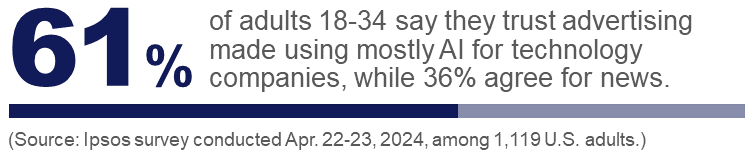
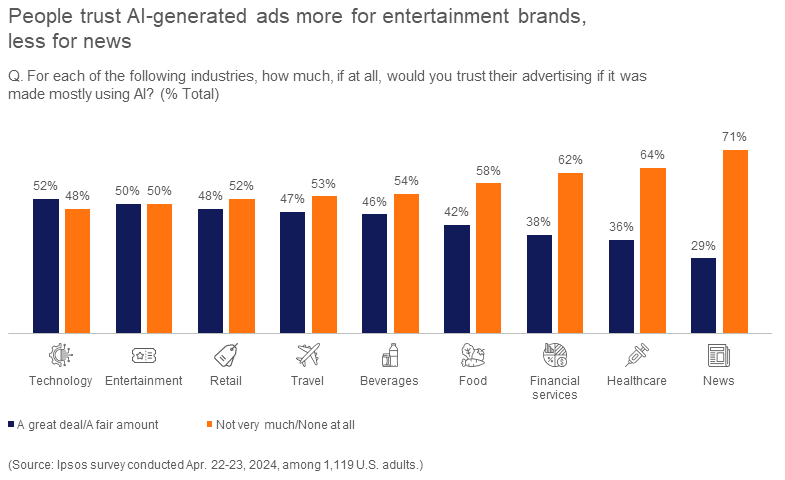
MacArthur: We asked consumers where they would trust advertising if it was made using AI, and the greatest trust was for technology and the least for news. Does that surprise you?
Guimaraes: No, but I do think that no matter what category, it's going to have to be regulated.
MacArthur: Why will it need to be regulated?
Guimaraes: Because [regulators] are not going to be OK with AI generating an ad that says that you are better than the competition if you are not. There are still roles that will need people vetting all that. That ultimately depends on what the guidelines are in place at the time.
MacArthur: Do you think ads generated by AI need to be disclosed or have a disclaimer?
Guimaraes: Yes, especially if you're using people to be saying certain things. Obviously, all of that is something that [consumers] should know.
MacArthur: How concerned are you about AI replacing your job or devaluing the work you do?
Guimaraes: To be clear, I know AI's going to replace some jobs in general. There will be probably a point where clients might just think that's going to get them cheaper, faster work. The reason I am not concerned is because of the rigor that we put behind the work and all the analysis that we do that's beyond just coming up with a solution. Sometimes people think they can take shortcuts. Ultimately, they realize that you have to go back and do the thing the way you used to. There'll be some of that, but I still think we need humans involved in the process.
“You can take some shortcuts, but I don’t believe in using AI to create the idea.”
MacArthur: Sometimes I have an idea in my own head, but I can’t quite articulate it. And I'll start playing around with the prompts, and that forces me to change the way that I'm speaking and thinking about it. In some ways, it makes me better at building my own ideas.
Guimaraes: That's such a good point. Every time you're putting something on AI, the prompt is really something that you're finessing to get the right result. You’re creative directing, right? And that does help you talk about your vision to express. Like, you're only going to get that outcome if you're putting in the right prompt.
MacArthur: Many people hope AI will save them be more efficient or spend less. So how could that ultimately affect the bottom line for agencies?
Guimaraes: I'd go as far as to say with confidence that the increase of AI's prevalence in advertising will put a premium on human creativity. Sure, it might replace some roles, like lower-funnel asset creation from marketers who believe they'll get a higher yield at lower cost. But AI's lack of originality and hindered ability to really respond to what's happening in culture — understanding nuances and relatable, authentic language of any given demographic — in real time, will have marketers calling in humans all day long.
| ← Read previous How AI evaluations will support smarter marketing spending | Read next → |