
Why tomorrow’s family could be a radical shift from the past
 Download the full What The Future: Family issue
Imagine it’s 2052.
The family of tomorrow will be older and smaller, unless things change. The decades-long trends toward getting married and having kids later (or not at all), coupled with increasing lifespans, are culminating in two new life stages: Twentysomethings and what I call the “Omnigenarians.” The potential impacts for brands are enormous.
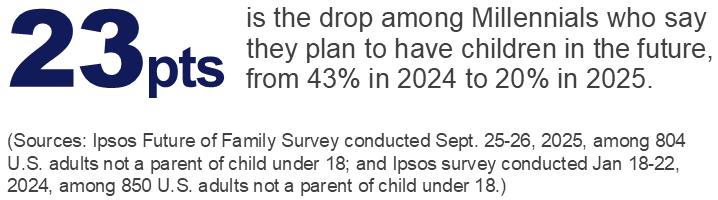
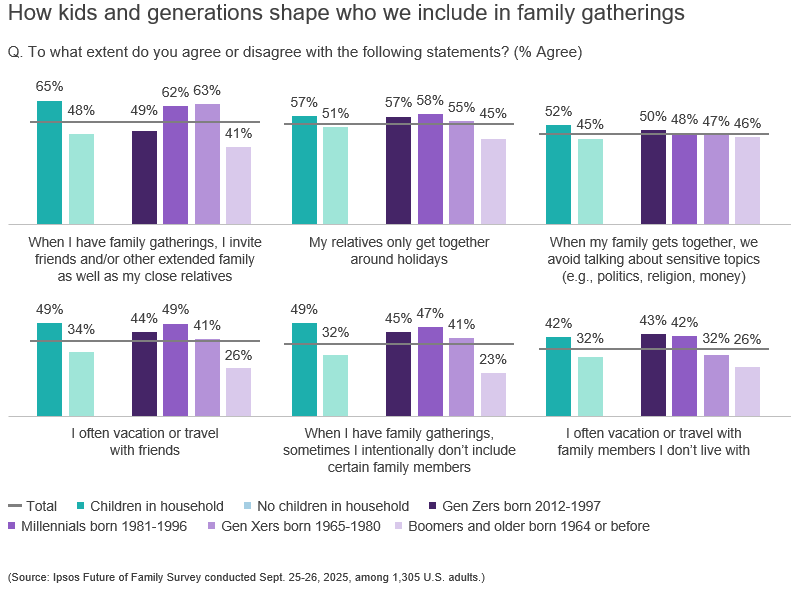
This could lead to shifts in whom we consider to be “family.” There are signals in the data: Half of younger Americans think that friends count as “family,” according to the Ipsos Future of Family Survey. It’s plausible that we’ll become even more tribal as a nation, building our own families and communities out of people we choose. We’re seeing this with the tech-driven enclaves owned by the wealthiest Americans, and efforts to build ethnocentric communities in the Deep South.
A growing share of Americans also think that tomorrow’s family will be worse off than today’s. That’s plausible. As we live longer, Americans have the greatest gap (12 years) between our lifespan and our health span. Simply put, we’re living longer but not healthier. That exacerbates a caregiving burden for people ill-equipped to manage it: the “sandwich generation” families with their own kids. That puts a squeeze on folks in the middle, while simultaneously draining funds from the older cohort. And there’s a critical shortage in the workplace of professional caregivers, assuming that one can afford them.
There are broader labor issues with not having enough younger people in the workforce, too. In some ways, AI could help bridge that by literally reducing the number of younger people (entry-level jobs are perhaps more easily replaceable) in the workforce.
It’s certainly problematic if AI accelerates the replacement of younger people faster than necessary. There are some signs that’s already happening. The long-term consequences have not necessarily been well thought-out in our society.
Impact on consumer behavior
Whom we live with that we consider family also affects our spending and savings habits. Living alone is happening at both ends of the age spectrum. Many Twentysomethings haven’t paired off and the Omnigenarians often outlive their spouses. Regardless, each has to buy the household necessities and cook for one, etc. When we consider our chosen family, we often invite them to gatherings and buy gifts for them at holidays. It all adds up.
Screens and splintered culture
The biggest change is our move from a domestic economy to a tech-based one. For parents of younger kids, tech issues like screen time, privacy and safety are the biggest tensions in the household. Policy and platform solutions to those challenges would be welcome, as we’ll discuss.
Beyond those tensions, the rise of streaming and algorithm-driven entertainment means that in many ways, it’s harder to have family entertainment. There isn’t necessarily one screen that the family gathers around.
Finding entertainment your family can agree on is just one symptom of the larger content diffusion problem. How many cultural conversations with friends and family do you have to start with “Have you seen …” followed by an explanation, only to find the reference is lost on them anyway?
Global trends and countertrends
We mentioned that reversal of demographic trends is plausible. Unlikely, but plausible. The Trump administration has been clear in its desire for Americans to have more babies. It’s a manifestation of another Ipsos Global Trends, Retreat to Old Systems, which is a mix of warm, fuzzy nostalgia and a gender dynamic countertrend rooted in the idea that the system is broken and things were better at some earlier point in time.
You see this in the TikTok “tradwife” trend with women celebrating what they see as a return to traditional gender roles. It’s unclear if they just want to be “provided for” or want to go back to a full-on patriarchy. (Remember, there are a lot of American women alive today who once couldn’t get a credit card without their husband’s approval.) The pendulum of gender dynamics is swinging widely and wildly at the moment. But no experts think we can goose the fertility rate fast enough to really reverse population decline — and certainly not if we curb immigration, which historically is how America’s population has actually grown.
There are many plausibilities to plan for. And since we’re talking demographics of family, many of these are futures that will play out over decades. That said, questions abound in the near term, too:
- Is there a way to reduce the tension around screens in our families?
- What will parenting and caregiving look like in the future?
- How will gender-dynamic pendulums swing, and what will that mean for household formation and household roles?
- How will the changing makeup of households and families affect spending patterns?
- Oh, and what on Earth (and beyond Earth!) will happen with the kids being born now? We’ve got a stellar Q&A about Gen Beta later in this issue.
But as Dolly Parton has taught us, we’ll “try to find some better way/ to solve the problems day-to-day, in the family.”
← Read previous | Read next → |