
How the ways we respond to climate change could lead to conflict
The rhetoric about climate change often is stated as a type of war. But could our changing environment spark actual conflict? It’s already contributed to some, including the Syrian civil war, among others, says Josh Busby, a non-resident fellow at the Chicago Council on Global Affairs. A professor of public affairs at the University of Texas at Austin, he also just finished two years as a senior climate advisor at the U.S. Department of Defense. His 2022 book, “States and Nature, the Effects of Climate Change on Security,” explains why climate shocks can lead to negative security consequences.
MacArthur: What is the biggest concern about how climate change could factor into future conflicts?
Busby: We're now in a world in which there are major responses to climate change that could be as, if not more, significant than the physical consequences of climate impacts.
MacArthur: Such as?
Busby: We're increasingly trying to compete for sourcing of raw materials for the clean energy transition, thinking about critical minerals like cobalt, lithium. The conflicts over those responses may escalate conflict. That could be because there are major distributional issues associated with where you are able to source those minerals. They're both within countries and maybe between countries. That is something that we're not fully aware of. But we could also get a little too hung up on thinking about whether climate change itself will become, along with other factors, a driver of conflict.
MacArthur: Is the risk of global conflict over climate change overblown?
Busby: It depends on who’s overblown with whom. The intelligence community in their last assessment about climate change that came out in 2021 talked about the risks of conflict over these responses to climate change. Like efforts to engineer the atmosphere to reduce the impact of climate change, either through solar radiation management, or efforts to change the ability of the ocean to absorb carbon dioxide. They were really worried about unilateral efforts by one country to try to geoengineer the atmosphere that could become a grave source of conflict.
MacArthur: How might that look in the future?
Busby: Trying to tease through with some certainty the social effects of climate that we know are happening and other things that are somewhat unknowable hearkens back to the old Donald Rumsfeld missive about known unknowns.
MacArthur: Your book discusses why drought contributed to civil war in Syria but not in neighboring Lebanon. Is that a good example of the risk factors?
Busby: That conflict was internationalized, in part, because conflicts don't stay local. There are a variety of risk factors for conflict within countries. With respect to climate change, it's high agricultural dependence. If they live in countries that have a recent history of violence, that have weak states, that have what we say is high political exclusion, what happens when there's a drought and their needs are not met by the government, they're actively discriminated against? It’s a pretty complex portrait. But we have to start to think about how our response to climate change could also become an important source of friction going forward.
“We talked about Puerto Rico after Maria, where people went a year without power. But the long-run consequence could be a further decline in Americans’ trust that their government is there to respond to their needs.”
MacArthur: How does the U.S. compare for its risk of conflict due to climate effects?
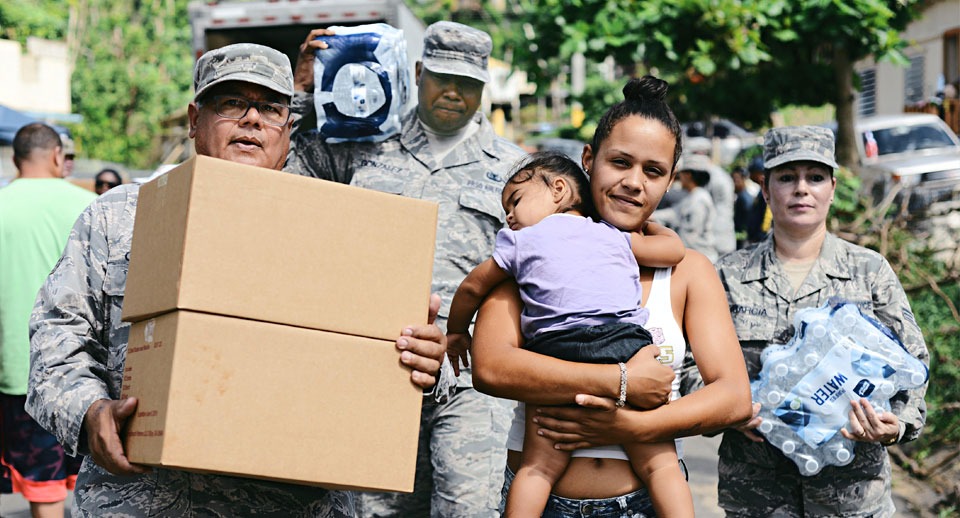
Busby: The U.S. isn't immune to any of those problems. We're better prepared on some level than other countries, given our relative wealth to be able to deal with them. But when you do not have parts of the country as well- represented in government, then we expect worse social outcomes. Think about Puerto Rico after Hurricane Maria. It wasn't merely its physical distance as an island, but also its political status as not a state.
MacArthur: How do policy decisions trickle down to businesses and citizens?
Busby: We don't have to accept the fate of runaway climate change being inevitable. We now have instruments and tools available to us at that are increasingly market competitive, like renewables that we can make the transition to cleaner energy. Companies are in a position to not only lead the way through decarbonization, but also make a lot of money from that. Companies that can innovate and deliver those products that allow us to decarbonize are going to help us stave off the worst effects of climate change.
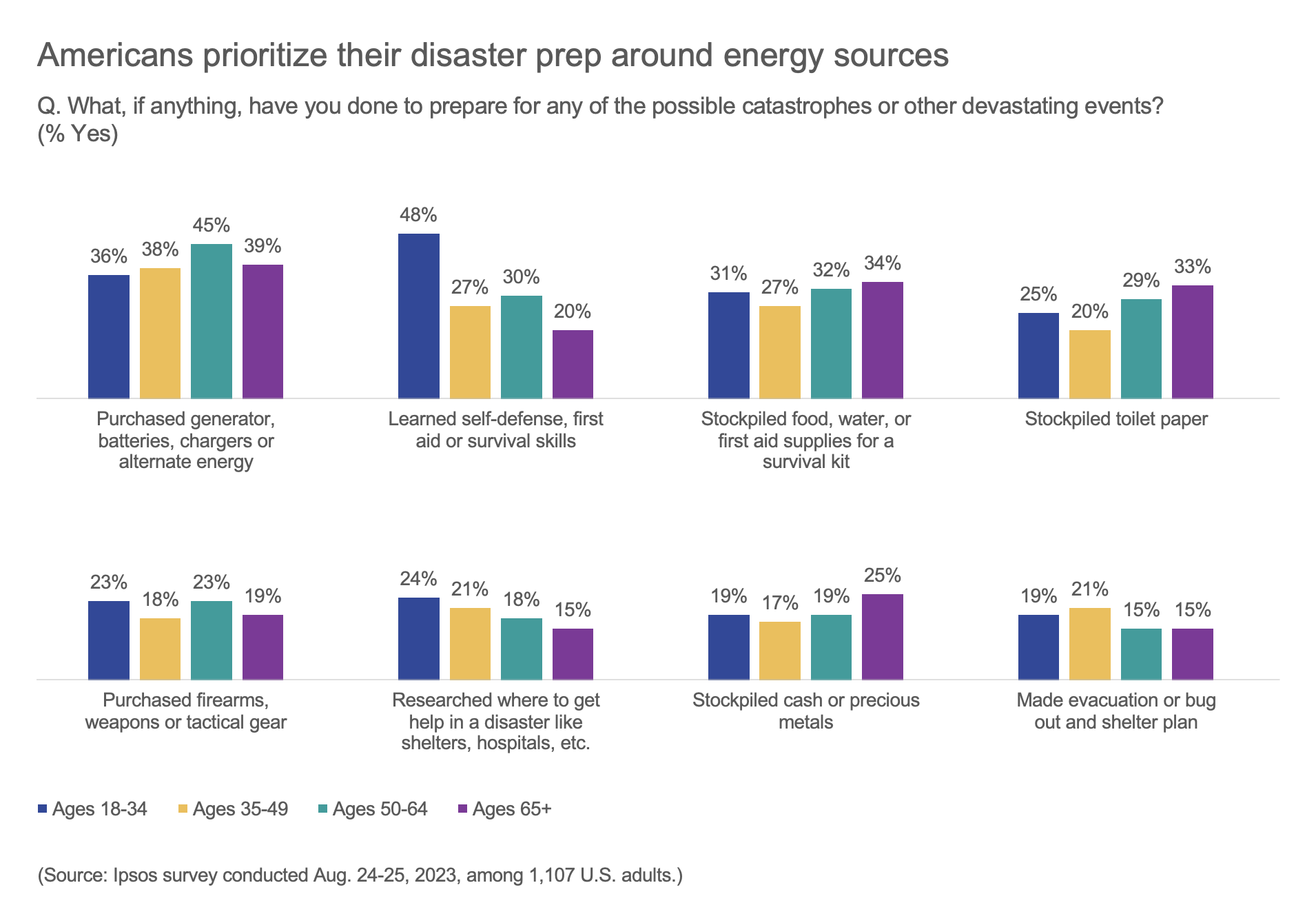
MacArthur: An Ipsos poll found that among catastrophes, Americans were most prepared for a power outage. What do you make of that?
Busby: We talked about Puerto Rico after Maria, where people went a year without power. We had the Texas freeze a couple of years back where we lost power for three days, and several hundred people died in that context. You may be worried about localized looting on a temporary basis until order can be restored. But the long-run consequence could be a further decline in Americans’ trust that their government is there to respond to their needs.
|
← Read previous |
Go back to the beginning → |
For further reading
Ipsos Top Topics: Sustainability