
Why the menopause revolution should matter to businesses and policymakers
Menopause, when women stop having a full period for a full year because their ovaries stop making estrogen, has vaulted from taboo to hot topic. It’s sparking widespread discussions and celebrity-endorsed products that could create a $600 billion market by 2030. Dr. Monica Christmas, associate medical director for The Menopause Society, welcomes this shift as an opportunity to advance women’s healthcare by addressing misinformation and developing personalized care.
Kate MacArthur: What do we know about menopause today?
Dr. Monica Christmas: It’s a natural process that 50% of the population is going to go through if they are lucky to live long enough. By age 55, 95% of women will have reached the definition of natural menopause. We start to experience symptoms related to hormonal fluctuations up to seven to 10 years before those periods actually stop. And that time frame is called perimenopause.
MacArthur: Besides our aging population, why are we talking about menopause so openly now?
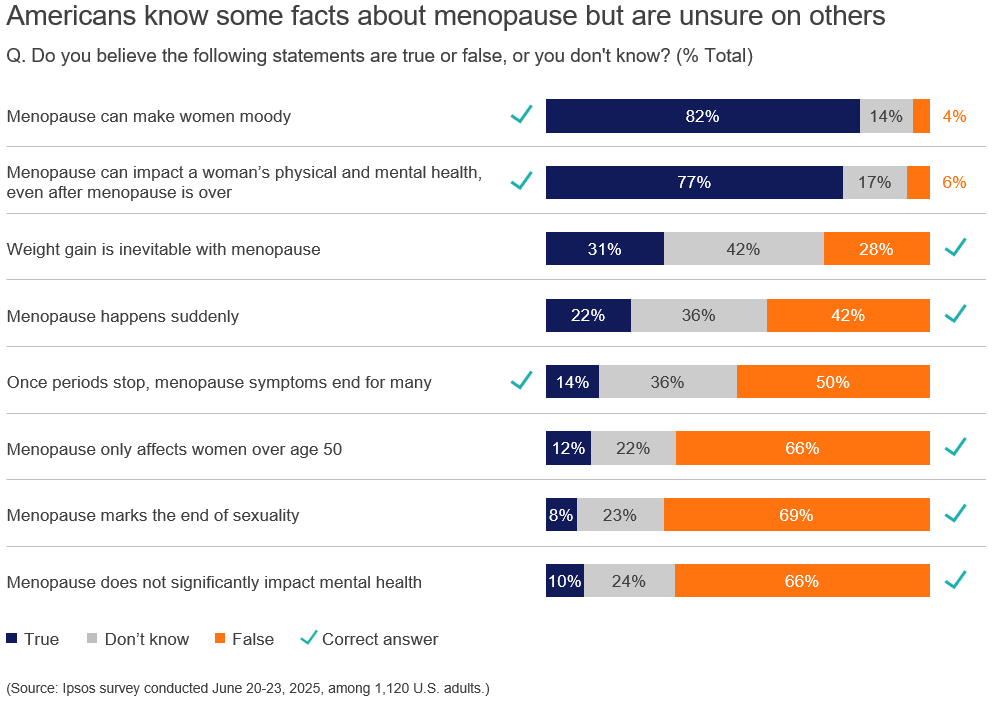
Christmas: Social media plays a big role. Unfortunately, there's not a lot of regulation around who's disseminating that information and checks and balances. So much of the information out there is not all true.
MacArthur: What’s the biggest myth you’ve heard?
Christmas: I get patients who are perimenopausal and they're demanding hormone therapy. That's where the myth part comes in: That hormone therapy is being withheld from us, that it's got all these magical properties. It's the antidote to aging. It's going to make me skinny. It's going to make my hair stop thinning. It's going to make my skin less wrinkled. I'm going to have more energy. I am a strong proponent and prescribe a lot of hormone therapy, but it is not a magic jelly bean.
MacArthur: Is this new awareness shaping how people think about long-term healthcare?
Christmas: It should be. It's not just one thing or looking at people in a silo, but comprehensively assessing an individual patient, looking at what their other risk factors may be and what their symptoms are.
MacArthur: What’s the opportunity for understanding how menopause affects women's long-term health?
Christmas: It is very difficult to disentangle what is truly due to menopause versus what is due to chronological aging. And that's an important part of this because men experience things, too. This is a natural part of aging, and we don't have a way to halt or stop the aging process. And there's not one menopause syndrome that every single person gets. There are some people who get very few, if any, symptoms and sometimes only during that menopause transition. Then there are other people who have every possible symptom under the sun.
 It is very difficult to disentangle what is truly due to menopause versus what is due to chronological aging.”
MacArthur: How can technology help?
Christmas: Is there opportunity for the tech world to create whatever to help motivate people or to help them continue to track exercise or novel ways of burning fat or address that known issue that is just a normal fact of aging? How do we prevent osteoporosis by using weight-bearing exercise to maintain our good muscle, our bone density? Is there some device that gives you in real time what your bone density is? I’ve seen a device that could be attached to the skin that measured body temperature and emitted a cool stimulus throughout the body before the hot flash happened. Is there a way to preserve ovarian function? Can we freeze parts of the tissue and then reimplant them later?
MacArthur: What role could businesses have?
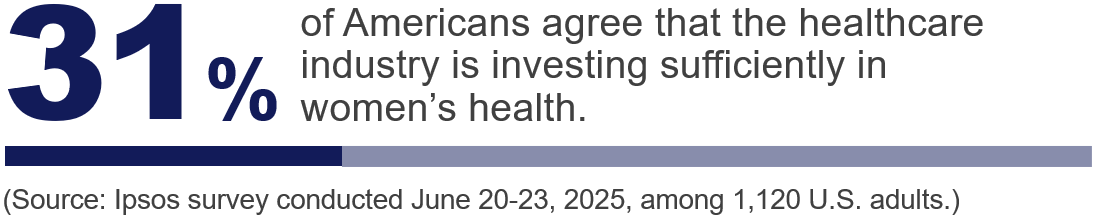
Christmas: I can offer somebody treatments for whatever they're experiencing. However, if their insurance doesn't cover any of the treatment options, and they’re cost-prohibitive, then everything we just discussed was for naught. Especially for midlife women's health, hormone therapy, for example, isn’t always covered for a woman.
As for products, I recently was sent information on a non-hormonal, moisturizing device to help vaginal dryness and painful intercourse. The company also made an apparatus to help with urinary incontinence and uterine prolapse. Both were over-the-counter and could be purchased without a prescription. New non-hormonal treatments for hot flashes and night sweats are being developed. Genomics is opening a new world of treatment and preventative strategies. With funding and support, the opportunity for women’s healthcare advancement is endless.
← Read previous | Read next → |