

Why will in-person shopping matter tomorrow?
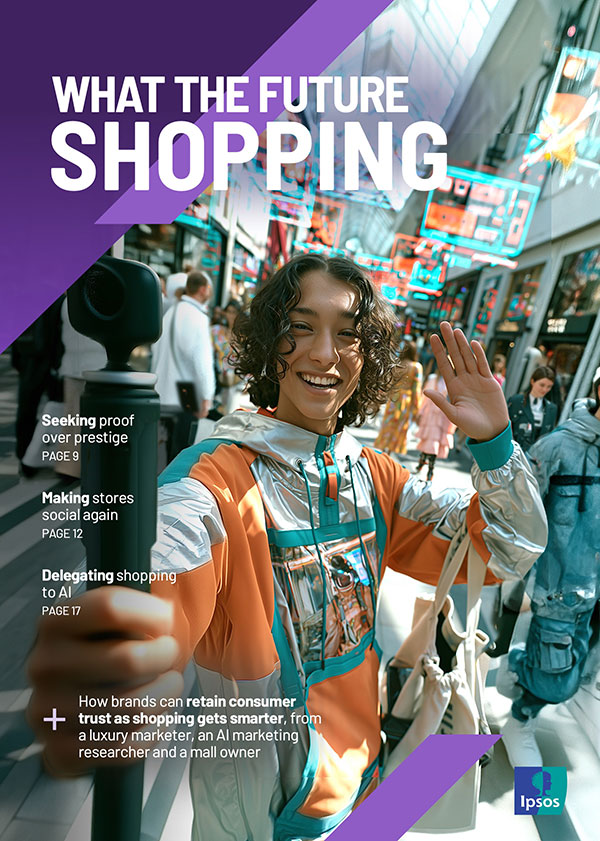 Read the full What the Future: Shopping issue
Shopping has never been more digital, yet some malls are making a comeback after decades of decline. The Macerich Company is betting its future on that turnaround. The third-largest U.S. mall owner and operator has spent two years under new CEO Jack Hsieh recalibrating its business for the future.
This includes streamlining its properties around premier destinations in growing markets and putting a dent in the company’s debt. Importantly, Macerich has centered its growth strategy on Gen Zers, who prefer going to physical stores for shopping and socializing. You can see it in the company’s top retail tenants, from Dick’s House of Sport to LVMH’s Sephora, which offer experiential shopping aimed squarely at youth. Michael Guerin, executive vice president of leasing, explains why physical retail is regaining relevance as the world becomes more digital.
Kate MacArthur: Malls are coming back but unevenly. What’s driving the comeback?
Michael Guerin: What you’re talking about is bifurcation, and the quality assets are going to continue to thrive. The owners are elevating and transforming them. When you go to a mall, you're going to see new food and beverage, experiences, entertainment, aesthetics, and the environments have been upgraded. The anchors are really an important part of it.
MacArthur: How so?
Guerin: If you think about the evolution of Dick’s Sporting Goods, a regular store is more of a traditional anchor. Their House of Sport concept, which they have about 40 open, is immersive, experiential, an amplified offering. They’ve got batting cages, climbing walls, a house of cleats. They have youth events. They really engage with the community.
MacArthur: Why are people going to malls again?
Guerin: It’s that third place that the consumer is looking for. They don’t want to be home. They want to go out and see other people. They want to break bread with their friends and shop and have fun and laugh.

MacArthur: People also are creating content and broadcasting their shopping experiences. How are shopping centers building around that?
Guerin: You’re creating a place where it’s aesthetically pleasing. We believe in: “We have a space. Let’s get a brand or a brand activation and create an opportunity.” Gen Z loves that. They love the new and they want to be the first. We all want something new. We all want something that’s maybe a bit unique and different. The brands are working on that in their four walls and we’re trying to partner with them and for ourselves in the common-area spaces.
 It’s that third place that the consumer is looking for. They don’t want to be home. … They want to break bread with their friends and shop and have fun and laugh.”
- Michael Guerin, The Macerich Company
MacArthur: For years, the ethos around shopping was to be faster, easier and frictionless. Was that overplayed and, if so, what’s the lesson for brands and retailers?
Guerin: For us, friction is good. Online was going to kill brick-and-mortar retail, but going into a shopping center, we look at it as all those choices; pulling up, seeing flowers, having a pleasant parking experience, going into the center, maybe being surprised by a choice that you didn’t think you were going to have. To us, there’s fun in the customer having more of their emotions evoked and feeling the fabric. You can only buy so many things online.
MacArthur: Economic pressure is building on consumers now. Will that make malls more vulnerable as the pressure increases?
Guerin: There will be cycles and I think the consumer is resilient. When brands don't continue to stay current or anticipate the changing preferences of the consumer, that's where the fallout really happens.
MacArthur: In an AI-powered shopping future, what will humans keep doing?
Guerin: It goes back to the social shopping aspect of it. What we’re learning and seeing is that people really want to be out, be social. You can’t do that with AI because it lacks the human interaction and the social shopping part of it. We’re all going to be way more efficient and we’re going to have way more digital opportunities to be more efficient, but we’re still human beings and we’re going to still want to have experiences. We’re still going to want to have fun. We’re still going to want to explore. We’re still going to want to be surprised. Those are the essential elements of human nature and psychology that are never going to go away.
MacArthur: Say it’s 2040. Looking back at consumer behavior in 2026, what is underrated today that will turn out to be way more important than anybody realized?
Guerin: That symbiotic relationship where digital platforms are tied into these great environments is going to be important in the future. That creates the best relationship between the digital, the brick-and-mortar and real-life social interactions.
← Read previous | Read next → |
For further reading: