
Why ideas matter more than how art is created
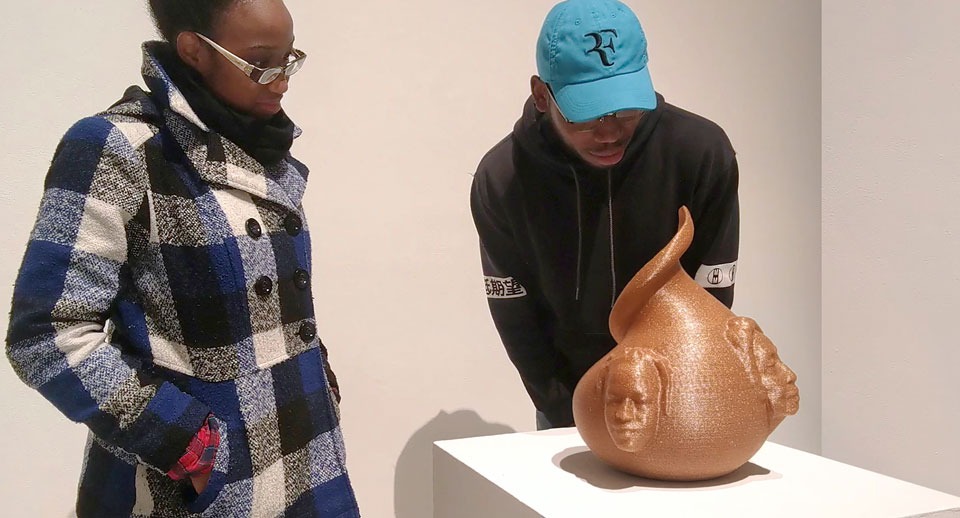
As AI-generated art becomes more prevalent, so do questions about its value and implications. Should it matter whether a human or an AI created a work? Stephanie Dinkins is the Kusama Endowed Professor of Art at Stony Brook University and a renowned artist focused on AI's intersection with social issues. She believes that while AI will change art, the ideas behind art matter more than the method of creation. She sees AI as an opportunity to push creative boundaries and produce better outcomes, especially for marginalized communities.
Kate MacArthur: Why work with AI?
Stephanie Dinkins: Because if AI is not ubiquitous now, it’s going to be. It impacts all our lives so much, whether we realize it or not, in the spaces that we understand, like our phones and things that we have. But also in much greater situations where many decisions are being made about our lives. I don't think we can afford not to delve into AI and think about it, because it is so intertwined in our world. It is crafting a lot of the structures that we live on top of.
MacArthur: You’ve worked with AI for more than a decade. What have you learned?
Dinkins: I've learned that AI is fraught. That people are trying in many instances to do better. Or at least when they are prodded to do the work of trying to clean biases out of datasets to make algorithms more transparent and open and visible for folks, they are trying.
In fact, as you watch the trajectory of generative systems, you can start to see when you're making images the ways in which companies have shifted in response to the calls from academics and others who have said, “This is biased. What are you going to do about it?” I've learned that there is a space of possibility to call for something different and to have that change. I've learned that sticking our head in the sand about the technology is not going to serve us.
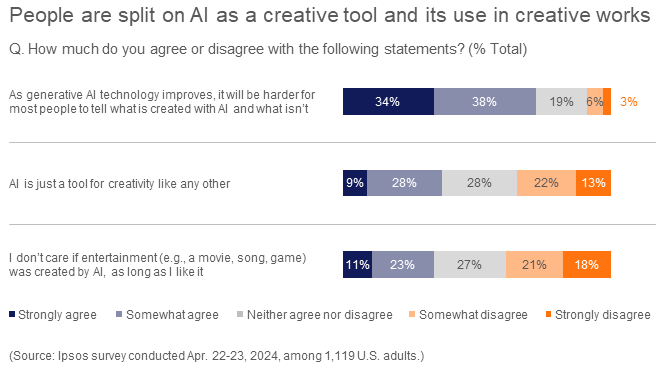
MacArthur: Will it matter in the future that AI created something instead of a human?
Dinkins: I happen to think in the future it's not going to matter that much. We can talk about stopping it. But my philosophy has been AI just is, and that means I need to contend with what it brings with it. To me, that has meant a lot of what I'm calling surfing, like surfing with or on the technology. Thinking about what it does, thinking about what I do, thinking about how we get together and put those two things together to make something better than either of us might have created alone.
MacArthur: How will we consider talent and artistry when AI is part of the equation?
Dinkins: Yeah, what is talent? It is interesting to think about the AI that won the photo contest. The AI knows the rules of photography so well that it can produce something that looks like a photograph that people want to see. But what artists do often is break the rules and break out of those rules. Now we have to adjust where we place the idea of talent. Is rule-breaking now talent, which maybe benefits society when we're more willing to step out and do things in ways that are more unusual?
MacArthur: If people can get art they like for $20 instead of $2,000, what’s wrong with that?
Dinkins: The way that it is more democratically spread is new, but we've always done this. It's just who's taking from who and what space? This is an interesting question because what does it mean when the masses are so threatened by something that we've always done that we want to curtail it? It's just a faster, more expedient way to do it, which makes it much more frightening because everybody can do it.
“My take on art is that the concept, the idea, the intellectual question is the art, not the thing.”
MacArthur: Does AI art cheapen the value of art?
Dinkins: My take on art is that the concept, the idea, the intellectual question is the art, not the thing. If you think like that, then it doesn't matter, because the idea is here and can take its form in many ways. Versus this object that is something to be revered for some reason. That's kind of a voting system where a bunch of people got together and said, “This is worth this because we are willing to spend this much money on it,” and there is a whole system that is set up to uphold that. I'm hopeful that it will allow us to be more adventurous and open and produce differently, because suddenly we can't rely on those systems that are actually pretty exclusionary.
MacArthur: Could human art become more valued as a result? How would AI change the value game?
Dinkins: It’s so hard to say where value lies. It feels to me that someone is always going to want to support at least some kind of art and feel like they have the market on something particular.
But that uniqueness now becomes something you lock away. You definitely can't put it into public digital space because then we can just clone it. Do we start making things for black boxes that just sit in containers so that the beauty is not available? Or do we unleash the beauty, whether it’s AI beauty, human beauty, hybrid, and consider that a way forward?
| ← Read previous How ‘Generative Reality’ will become a new art medium | Read next → |