
How superfan expectations are reshaping brand-fan relationships
There are millions of Taylor Swift fans (Swifties) out there, but only a few have turned that passion into a career. Among them is Kelsey Barnes, a music journalist and former Swiftie advisor for the Victoria & Albert Museum in London. From Barnes’ perspective as a superfan, Swift’s close relationship with her fan base has helped her balance superstardom with authenticity. That offers important lessons about what fans of all kinds want from brands, and from fandom itself.
Christopher Good: How did you get into Taylor Swift?
Kelsey Barnes: I think I was 14 or 15. I just remember hearing “Teardrops on My Guitar” and feeling very seen, despite not never having any sort of romantic experience whatsoever. I've just been a fan ever since.
Good: She has really broad cross-generational appeal. Why do you think that is?
Barnes: There are kids who went to the “Eras Tour” that weren’t born when I started listening to her! But I think that speaks to her relatability, the universal aspect. It doesn't really matter who or where you are. She was in Brazil. She was all over Europe. People feel seen, and it's not something that's specific to a country or age.
Good: Do you think you’ll be a fan for life?
Barnes: I've been a fan for over half my life now, so I don't know a life without Taylor Swift. As I look around my room, I have a picture with her over here, a signed photo over there. She’s more or less all around me!
I do think I'll be a fan for life. It’s just not a relationship I have ever had with an artist. And that’s because of her world-building and lyricism, but also because she has a way of transcending the artist-to-fan relationship, which I don't think a lot of artists are able to do.
Good: How does she manage that relationship?
Barnes: I mean, back in 2009, she was replying to people on Myspace. Obviously as she's gotten bigger, she's not able to do that. But she still tries to do things where she’s able to meet people. Her team invites specific fans to come to events and gets in on the fandom’s jokes.
I still feel very close to her, in a way. To me, it doesn't seem like she's like the biggest artist in the world.
Good: How do Swifties express their fandom?
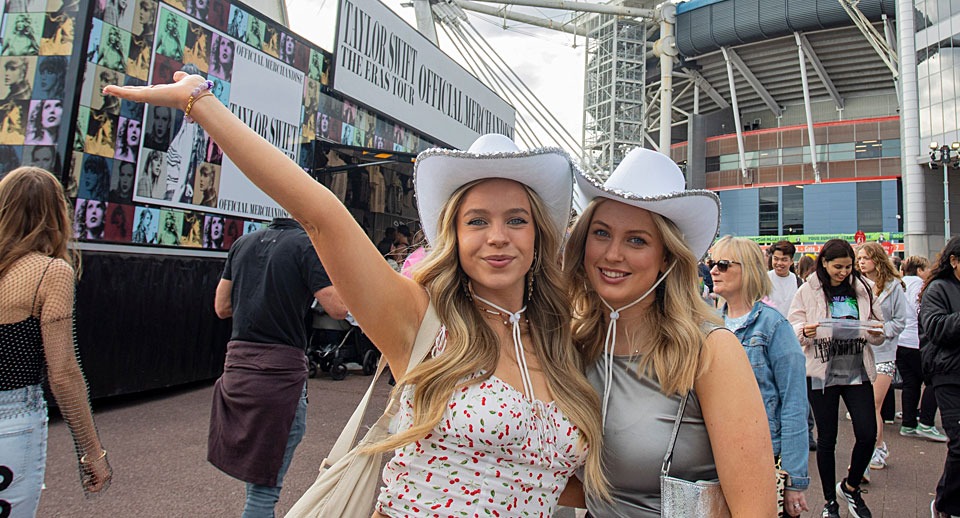
Barnes: A lot of my work as a journalist has been about trying to explain to people who might not understand Taylor Swift why certain moments mattered. But for others, art is the biggest one. I know people that have written books inspired by her songs. Also fan fiction, meetups, buying or making merch. Tattoos are big as well. I have a Taylor Swift tattoo, and my friends do too.
And inside jokes. Taylor has a line about “feeling like a crumpled-up piece of paper on the floor” — and on the “Eras Tour,” someone came in costume as a crumpled-up paper on the floor. It’s so niche and specific, but immediately you know the reference!
Good: Is there a right or wrong way for brands to engage with fans and fandoms?
Barnes: I mean, the wrong way is anything negative — like anything to do with Taylor being a serial dater. But the good ones just engage with the inside jokes. This is so stupid, but I think once Taylor was in Travis Kelce’s [stadium] box eating chicken fingers with ranch, and an update account tweeted “seemingly ranch.” It became this big joke in the fandom, and then at one of the London shows, one of the venue’s food options was chicken fingers “with seemingly ranch.” Taylor wasn’t even involved in that joke! But the fans lost their minds.
 As I look around my room, I have a picture with her over here, a signed photo over there. She’s more or less all around me!”
Good: What do fans actually want from fandom?
Barnes: The constant output is a big thing. Taylor seems to be releasing something at least once a year. But it’s also about finding people to engage with. I met some of my best friends online through Taylor, just because we happened to be in the same forums or I saw their tweet. I think community is something fans are looking for.
Good: Would you say it’s a sort of common ground?
Barnes: Exactly. I think the reason people decide to get really invested in a fandom is that it's another aspect of being seen. They can feel seen in Taylor's work, but they can also feel seen by talking to like-minded people. I mean, there's a reason football fans or soccer fans all come together and cheer on a team. They feel seen in that environment.
Good: Why does “feeling seen” matter so much?
Barnes: I think the artists, brands, whatever, that connect with people are able to make these very specific moments universal. Like, Taylor has a song called “22” and we’ve all been 22, you know? It can be something as silly as that. But I think that’s why people feel so seen in her work is because it doesn't matter if she's going through a heartbreak, whatever she's experiencing, somebody else has probably felt those same feelings.
← Read previous | Read next → |