
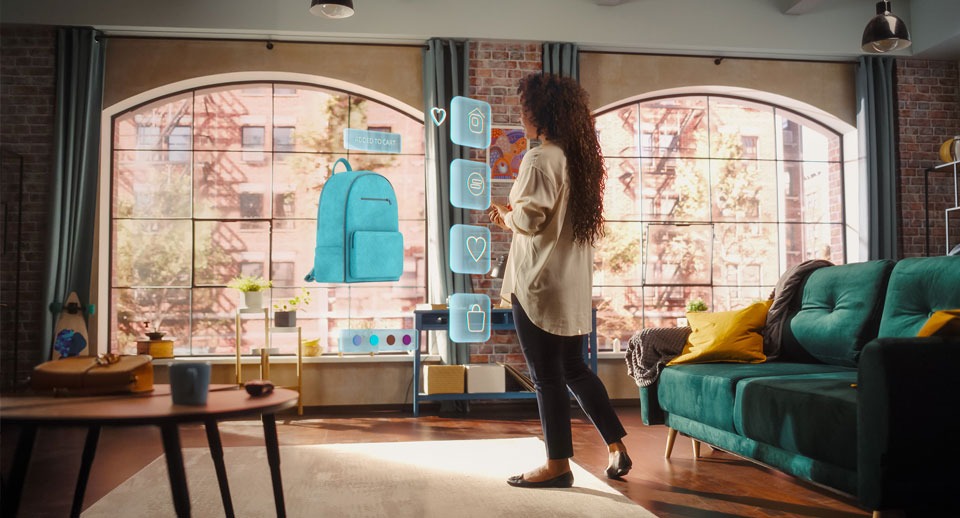
How shopping will be omnichannel, omnipresent and omniscient
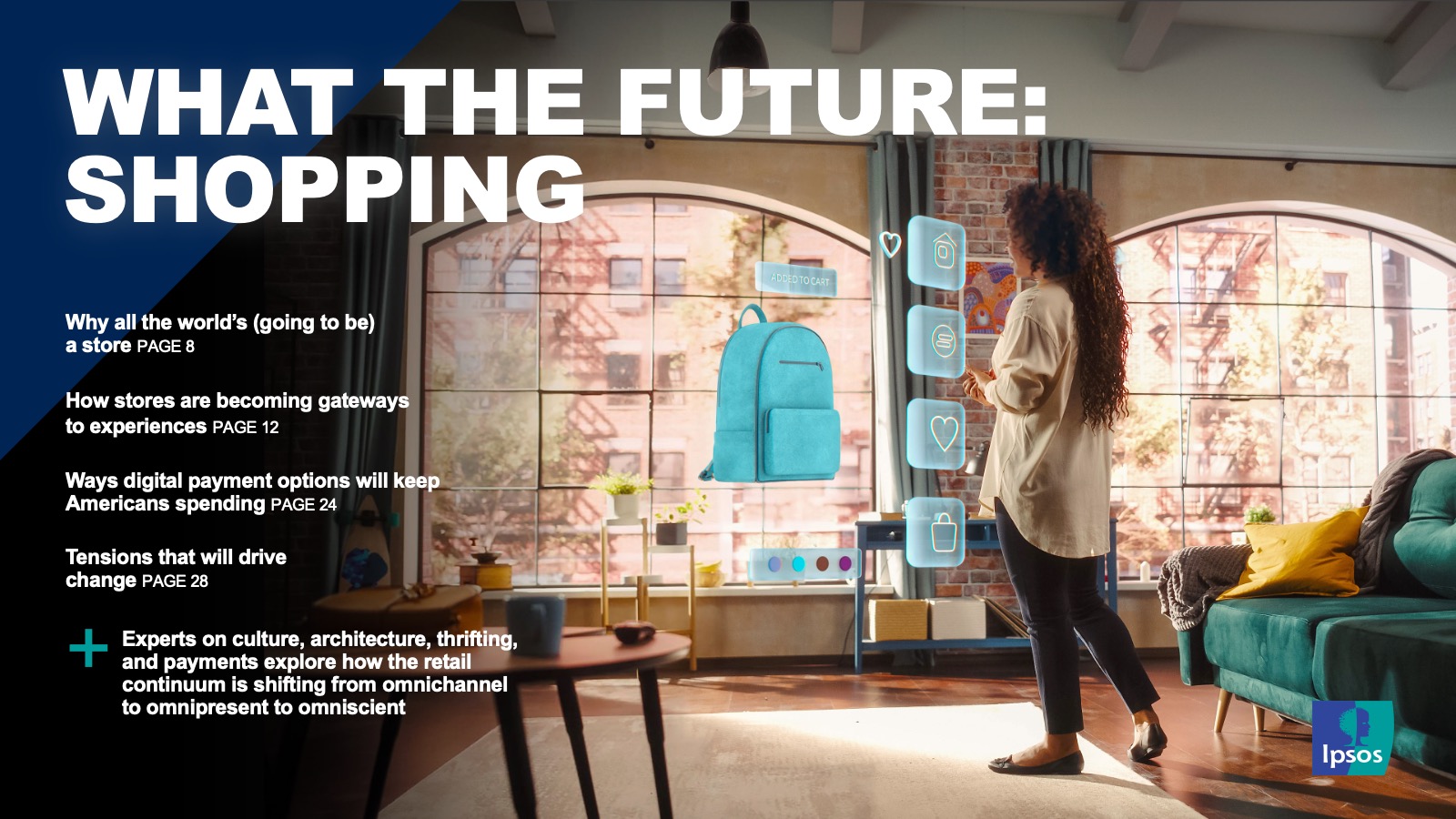
Imagine it’s 2034. People still shop and buy things. They still have to pay for them. But where and how will shift as consumers diversify, trends evolve, and stores take on new forms.
“Hellscape” is a word that could have come up in any number of previous What the Future issues, such as the futures of Conflict, Risk or even Democracy. But no, the first use of the term appears here, when discussing the future of shopping.
There are aspects of the future of shopping that might sound on the surface to be a little dystopian. But there are hopeful futures too, where picking up the essentials as well as the fun-to-haves and the want-to-haves becomes easy, instant, and, dare we say, entertaining.
Today, we are on the continuum of a move from omnichannel retail into omnipresent and omniscient retail. Soon, everything, everywhere will be shoppable; payments will be made in real time; and all our data will make targeting ads and advertainment seamless.
We will be passively targeted on every physical and digital surface. And we will actively shop in our content and even off the bodies of strangers on the street. You won’t just comment, “Nice shoes!” to a passerby. You’ll be able to snap a pic and have it delivered by the time you get home.
Of course, then you’ll have to pay for it, a tension worth noting for a wide swath of today’s Americans who are racking up record credit card debt against stubbornly high interest rates.

How will your brand thrive in this landscape? And how important is it to lean into trends? There is no better example of a brand understanding and taking advantage of shopping trends right now than Stanley with its now-ubiquitous multi-colored mug. This product has transformed a 110-year-old business and grown its sales tenfold. It’s one thing to see that in a startup with some new product or new service or invention. But to do that in a well-established company is truly remarkable.
How did Stanley pull this off?
First, it hired the guy who helped make Crocs a thing. He brought with him an understanding of the role of influencers and drop culture, and, frankly, consumer FOMO. Part of it was simply a better understanding of gender dynamics and an awakening that Stanley could market its products to women, not just blue-collar guys, with their thermos. We’ll talk about a lot of these trends later with Taylor Welden, creative director of Carryology, which we touched on earlier this year in WTF Manufacturing.
Gender differences still matter
In the Ipsos Future of Shopping study, there really are gender differences in how men and women shop and buy. Which, in 2024, shouldn’t surprise anyone, yet seems to. Think back just 15 years to when a major grocery chain undertook a pretty standard SKU-reduction effort but branded it “Project SHE” (Simplify Her Experience) because the company felt that women shoppers were overwhelmed by the sheer number of products available to them. A blogger at the time compared this to a talking Barbie doll that was briefly on the market that said things like “Math class is tough” when you pulled the string in the back of its neck. Another blogger wrote, “The very idea is beyond insulting” and pointed out that, um, men shop for groceries, too.
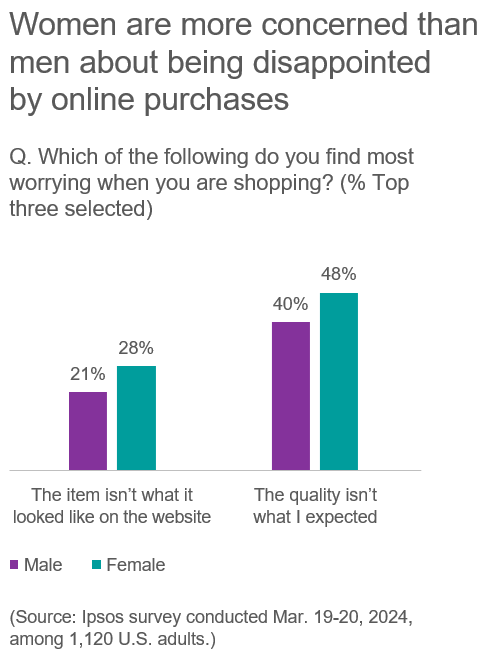
Did Project SHE work? Certainly not for everyone. Parents, who also shop differently than non-parents, saw their kids’ favorite brands “simplified” away and wound up having to shop at more stores to get everything on their lists. Not simple.
Today, regular grocery shoppers struggle with “tourists” from item-picker/delivery apps who don’t know where products are and clog up the aisles.
Women struggle with items (like backpacks, for instance) that are created more for men both aesthetically (everything is black!) and physically (most are designed for male torsos and hips).
Beyond demographics
It seems a little crazy that brands are still struggling to understand women and men, but many are. As we see an increasingly diverse, intersectional and fluid consumer base, brands will need to quickly ramp up their product development and marketing to appeal to tomorrow’s shoppers. We’ll talk about that with Publicis Groupe’s Angel Bellon. Part of the answer might also be something we’re seeing more of: collaboration between content makers and product makers, as Carryology’s Taylor Welden will discuss.
On that, Angel Bellon talked about a future with more collaboration between complementary but unexpected retail partners, like a fashion brand or furnishing brand with a food manufacturer to create a new shopping experience.
Part of the answer might be more experiential shopping, as we talk about with MBH Architects’ Helen Herrick. Stores become more places to discover or try on and touch goods you could otherwise only find online, or to be entertained and delighted as you shop.
Part of the answer might be digital spaces, where the sales funnel collapses from a long period of awareness and research to a narrow bit of action over time to a nanosecond between discovery in a social media ad and <click> purchase. Could that mean we’re in the market for more categories more often? Marketers and makers can tap into niches and through social media and online spaces collect and connect enough passionate followers to grow a business or a marketplace. A mashup of mass-niche, if you will.
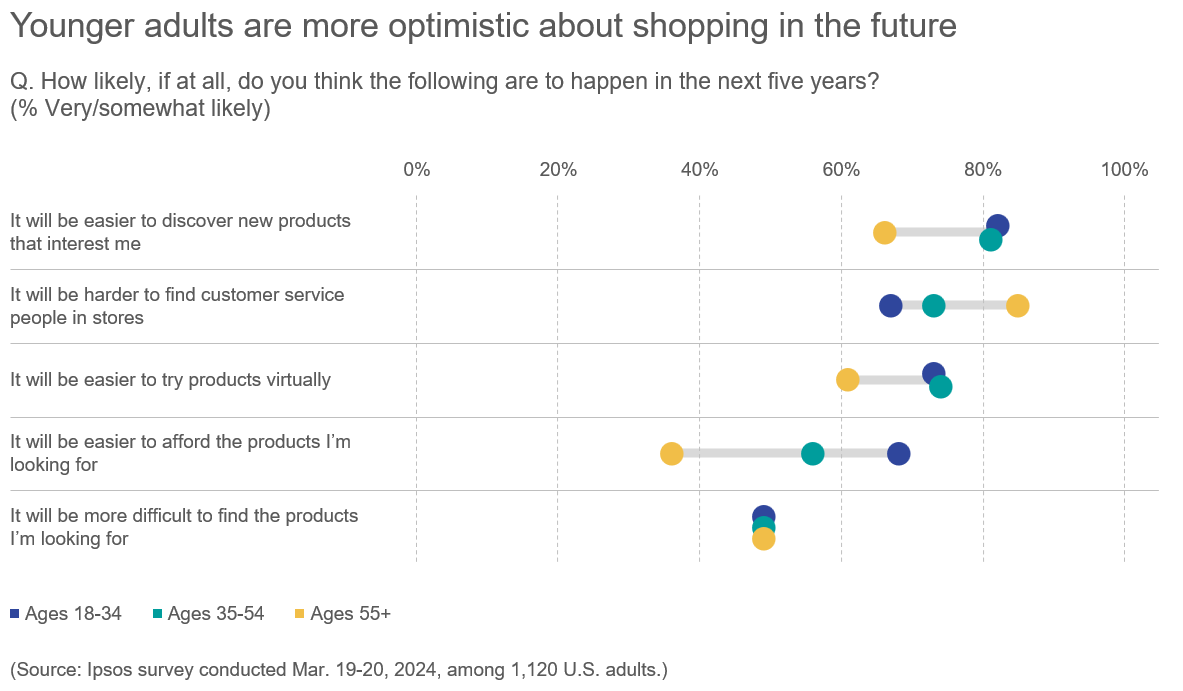
But it’s worth noting that those who are most used to social shopping and who are leaning into sustainability (i.e., younger shoppers) are most optimistic about the future of shopping.
If all of this sounds like consumerism run amok, there are countertrends toward sustainability and a more circular economy that also should be considered. Part of that is better quality goods as we earlier discussed in Manufacturing. Part of that is also leading to an efflorescence of thrifting culture as we talk about with author and pro thrifter Virginia Chamlee.
Evolving transactions
Once you’ve found the item you’re looking for, whether through obsessive fandom and research or through impulse, you’ll have to pay for it. Part of this is macroeconomics coming into play as we think about interest rate projections, the economic outlook and the regulatory landscape. Part of it is technology, as payment mechanisms change and emerge and evolve. There’s also a plausible future where today’s proposed legislation about interchange fees and competition leads to a very different merchant payment setup and upends the reward and loyalty points economy enjoyed by points travelers and cash-back aficionados alike.
The move to digital is the biggest thing to hit payments since the move from a barter economy to a currency-based one. Oh, or bigger since there never was a barter economy in the first place, as readers of the late David Graeber’s book “Debt,” would know. We’ll talk about all this with Payments Dive Editor Lynne Marek.
To recap, in shopping and any business, really, understanding and taking advantage of trends can lead to growth and innovation for a brand. Shopping, which was upended by e-commerce at the start of the century seems ripe for a new era of disruption.
Key questions for the future of shopping
- What will your retail “portfolio” look like?
- How will you recruit and retain a diverse consumer base?
- How do you tap into your most passionate customers, and can they create a community?
- Can your products take on a second life or be made more sustainably?
- Will your customers be able to afford to buy All the Things?
In the future … people are still going to shop. It doesn’t have to be a hellscape. There are plenty of positive trends to tap into. We just have to make a future that people want to buy into.
| ← Read previous The future of shopping will be seamless and smart. How brands can get ahead | Read next → |
![[WEBINAR] Ipsos Reputation Council 2026: Life After Predictability](/sites/default/files/styles/list_item_image/public/ct/event/2026-09/thumbnail-templates%20demo_2.png?itok=d-YX5bio)
![[WEBINAR] Know America at 250: Public Opinion Update](/sites/default/files/styles/list_item_image/public/ct/news_and_polls/2026-09/250_0.png?itok=7pwykKmG)
![[WEBINAR] Ipsos Global Trends 2026: The U.S. Edition](/sites/default/files/styles/list_item_image/public/ct/event/2026-09/thumbnail-gt-26.png?itok=AbsiS6xk)