
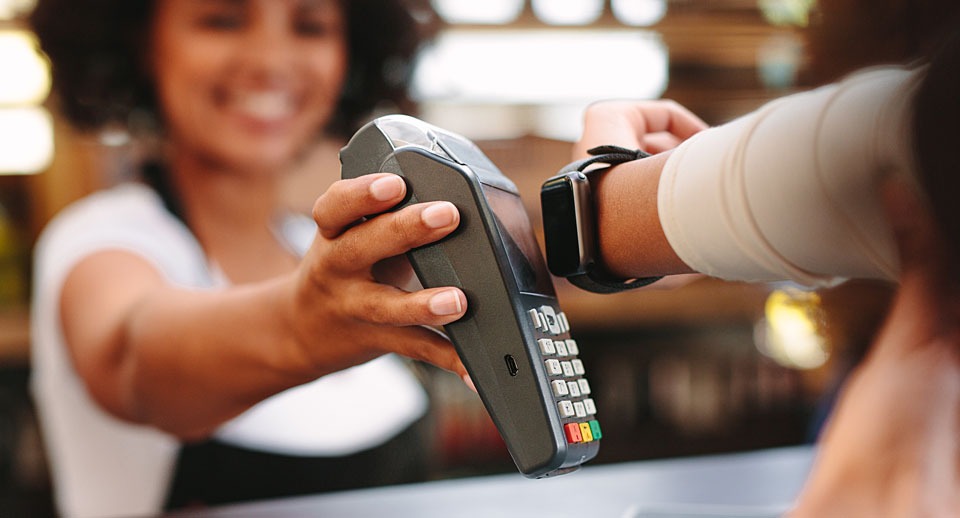
Ways digital payment options will keep Americans spending
The act of paying for items and services might not be the most exciting part of the retail experience, but it’s obviously an important one. Inventing currency arguably propelled us forward as a civilization. Then for millennia not much changed. Now digital payments, real-time payments and a shifting world of fees and rewards are creating rapid and potentially seismic change. Lynne Marek covers this industry as editor of Payments Dive. When she thinks about the future, she’s watching the challenging financial world for consumers and shoppers alike.

Matt Carmichael: What COVID-era trends have stuck with us in the payments space?
Lynne Marek: I see four categories to watch. Frictionless is the simple idea that folks who sell things want to find ways to make it easier for you to purchase them. It's simple, and we will continue to see more of that.
But as digital payments have proliferated, the fraudsters are looking for new ways to take advantage of consumers. Payments players will increasingly double down on making sure that they safeguard their customers — and frankly, partners — because the banks are very much involved.
Carmichael: Interchange fees charged by credit card companies are a big topic at the moment, too.
Marek: As more companies want to capture the revenue streams that are associated with taking payments, you’re seeing something called embedded payments [that click to an embedded link to finish the transaction] show up in unlikely places, like healthcare.
Carmichael: What about newer tech like biometrics and cashierless shopping?
Marek: Those are creeping into retail. Biometrics are going to stick. On the cashierless side of things, you may start to see some pullback because of theft.
Carmichael: Do people worry about fraud, or do they just buy stuff and sometimes they get dinged?
Marek: American consumers are pretty aggressive. If they want to purchase something, they're usually going to find a way to do it. There is some research that says that if younger consumers find their preferred payment choice isn't available, like an Apple Pay option, they will just choose not to purchase.
Carmichael: Between fraud concerns and merchant fees, I’ve seen businesses flipping back to encouraging or even discounting cash purchases.
Marek: Americans will hang on to cash much longer than some other places. I think cash is here to stay for a while.
Carmichael: There’s legislation being proposed that would limit interchange fees and potentially upend credit card loyalty and points programs for shoppers. What will change if this passes?
Marek: I would point to Europe. They long ago tapped or found other ways to keep these interchange fees lower, and they still very much have rewards programs. I don't think it's going to change as radically right away as people might fear.
“American consumers are pretty aggressive. If they want to purchase something, they’re usually going to find a way to do it.”
Carmichael: What macroeconomic factors do you follow?
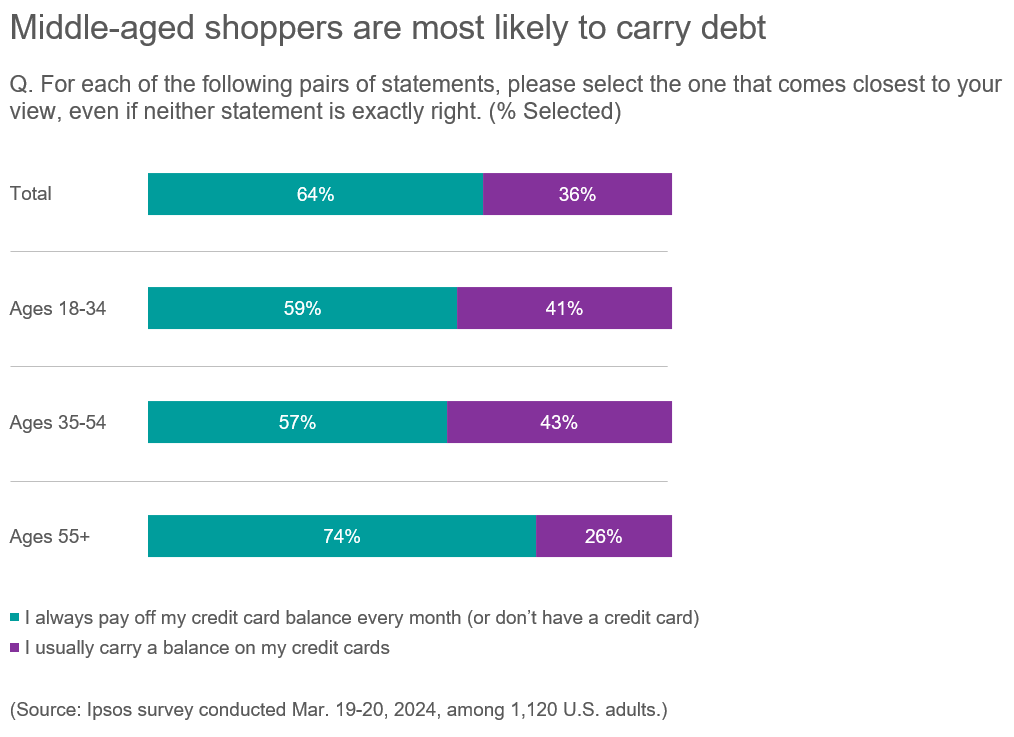
Marek: To the extent consumers are having a harder time paying off their debts, that matters to our industry. While some slice of revenue comes from interest payments or other types of fees, none of these businesses want their customers to be under too much financial duress that limits their spending power.
Carmichael: Where does “buy now, pay later” (BNPL) fit?
Marek: “Buy now, pay later” is on the rise and the macroeconomic factors that you just pointed to may be giving a lift to it because when people are feeling like they're stretched thin, they might turn to it a little more frequently. But the debt spiral is a really bad thing. As these BNPL players have introduced essentially a new service, there's a concern that the proper guardrails aren't in place to protect them, I guess, from themselves.
Carmichael: What else is on the horizon?
Marek: Real-time payments. Despite the fact that we still have few real-time services at our disposal, either for consumers or businesses, I fully expect banks to adopt these in the future, which will speed up payments for everyone. Brazil and India have already shown us what a real-time payments nation can look like.
| ← Read previous How to tap into influencers’ creativity while keeping your brand center stage | Read next → |
![[WEBINAR] Ipsos Reputation Council 2026: Life After Predictability](/sites/default/files/styles/list_item_image/public/ct/event/2026-09/thumbnail-templates%20demo_2.png?itok=d-YX5bio)
![[WEBINAR] Know America at 250: Public Opinion Update](/sites/default/files/styles/list_item_image/public/ct/news_and_polls/2026-09/250_0.png?itok=7pwykKmG)
![[WEBINAR] Ipsos Global Trends 2026: The U.S. Edition](/sites/default/files/styles/list_item_image/public/ct/event/2026-09/thumbnail-gt-26.png?itok=AbsiS6xk)