
A quarter of Brits say they have accidentally not paid for an item when shopping – most think it is unacceptable, but not a criminal offence
New polling by Ipsos, taken August 2-5, examines attitudes towards shoplifting and other low-level offences. A quarter (26%) of Britons say that they have accidentally not paid for an item when shopping. 2 in 10 (19%) say they have used public transport without paying for a ticket, and 13% say they have selected an item on a self-service till that is cheaper than the one they are purchasing. The same proportion, 13%, admit to taking something worth up to £1 from a shop without paying for it, while 8% admit to taking something worth up to £10 without paying for it.
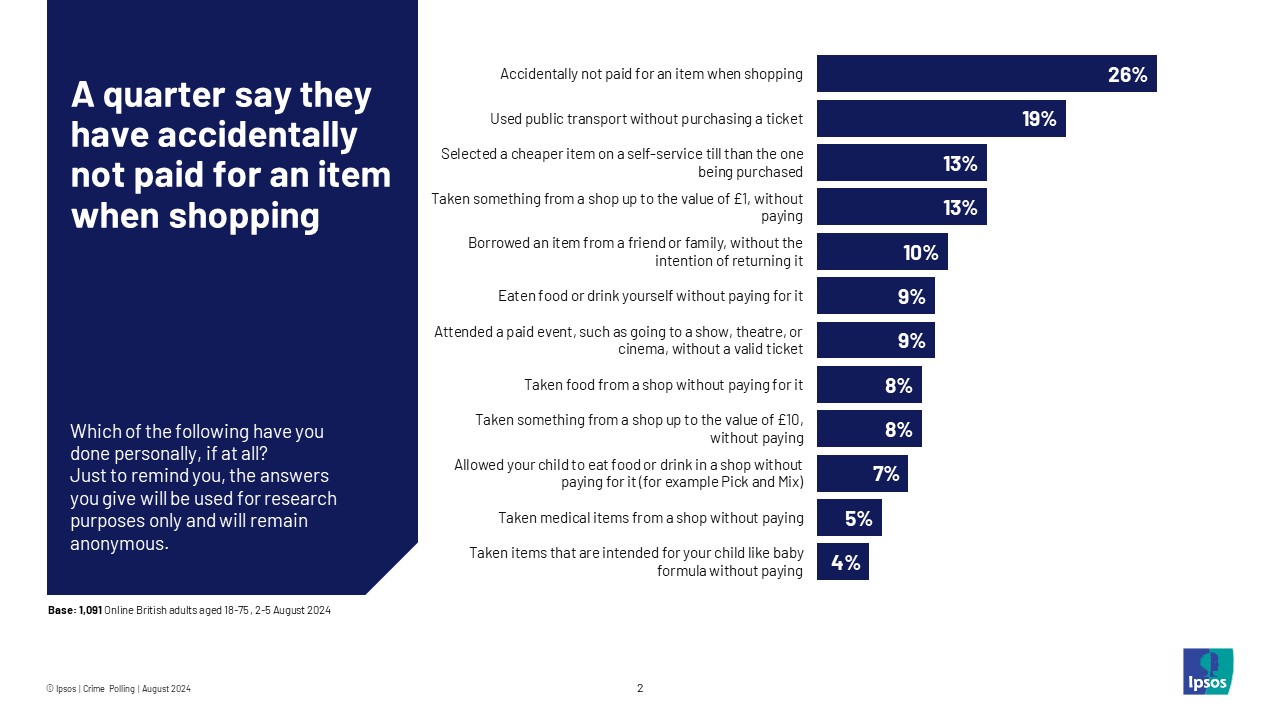
A third (34%) of Britons say that it is acceptable to accidentally not pay for an item while shopping, but almost twice as many, 63%, view it as unacceptable. Even bigger majorities think a range of other low-level offences are unacceptable. For example, 91% say taking something up to the value of £10 from a shop without paying is unacceptable, and 90% believe eating food or drink without paying for it is unacceptable.
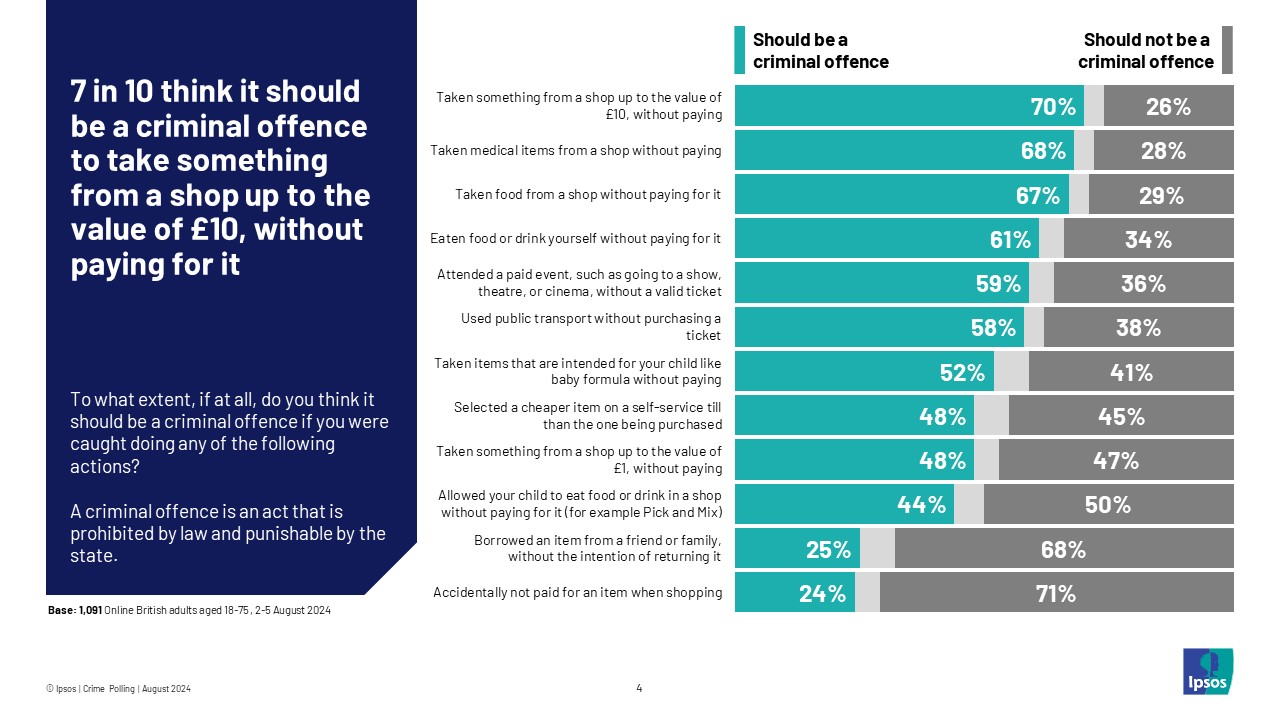
When asked about criminality, 7 in 10 (70%) think it should be a criminal offence to take something from a shop up to the value of £10, without paying for it. A similar proportion (68%) believe taking medical items from a shop without paying should be a criminal offence, with a further 67% saying taking food or drink from a shop should result in legal punishment.
However, while most think accidentally not paying for an item while shopping is unacceptable only 1 in 4 (24%) think it should be a criminal offence, the same as borrowing an item from a friend or family and not returning it. And views are split on whether some other offences should be treated as a criminal case – for example, taking something from a shop up to £1 in value, or allowing a child to eat food and drink (such as sweets) in a shop without paying for it.
Commenting on the findings, Hannah Shrimpton, Head of Crime, Cohesion and Security at Ipsos, said:
While a quarter of Britons admit to unintentionally failing to pay for an item, with a third finding this acceptable, the overwhelming majority think intentional theft is unacceptable, even of low-value items. This suggests a clear distinction in public perception: accidental oversights are seen by a minority at least as forgivable, and by most as not worth criminal sanction, while deliberate theft, regardless of value, faces strong disapproval - although even then calls for legal consequences also follow a hierarchy. Overall, the data suggests a public appetite for Labour’s mission to 'crackdown' on shoplifting and their pledge to reverse the policy that shoplifting of goods under £200 is not investigated. Although the public are split on whether items worth at most a pound, or where children and babies are involved, should be treated criminally, they are stricter towards other offences such as free riding on public transport, going to the cinema or theatre without a ticket, or taking items worth up to £10.
Technical Note
Ipsos interviewed a representative sample of 1,099 adults aged 18-75 across Great Britain. Polling was conducted online between 2-5 August 2024. Data are weighted to match the profile of the population. All polls are subject to a wide range of potential sources of error.


